miércoles, 1 de septiembre de 2010

I really need to buy PDF's and save them into a memory stick

Fuente:


Información:

Tuesday, August 31, 2010

I really need to buy PDF's and save them into a memory stick

PDF's are great format for RPG's. Well, I prefer books, as you can see them, feel them and read them comfy in your bed. But what is good in PDF's that you can take them with you. Anywhere. You can stuck hundreds of RPG books in the size of your finger.

One thing I don't like in PDF's is that I have bought already that RPG book, and then again I should buy it again to get a PDF version of it. There are few bundled sets where you get also PDF after buying the book, but it is rare. Different case is if I first buy PDF, but I got several RPG books already bought, so it buggers me to buy them again to get kilobits on my hard drive. That sucks.

But anyways, I now have some spare time at work and I did read
RPG Archive and got really, really inspired to do some NPC's. And I got those 1000 and 1 characters to do. So, I thought that yeah, I will do one, two or few of them.

Only problem is, that I am here at my work and my RPG books are at home. Hard to do characters without referral, meh. I could do one for Vampire: the Masquerade, as I can find character sheet to refer in internet and I remember how to share dots and what disciplines are, but I'd like to answer those character creation questions I don't remember. And my plan was to do a Nosferatu, so I'd also appreciate Clanbook Nosferatu for merits and flaws. So, no can do. Well, I could if I'd find both V:tM and Clanbook Nosferatu from
Drive ThroughRPG or similar site and bought them. But I don't want to spend money to obtain two books just to make characters I have already bought (both as new btw if it matters).

I thought also making a jedi (why would I want to do space pilot, negotiator or such when I could do a JEDI) for Star Wars SAGA. I know basically how rules work and have read few pages from here and there, so I could for fun scrap a character for the game. But same problem as with Vampire. I got the book - at home - don't wanna buy another copy (well, different format but still) of it.

So, that basically sucks. I own many RPG's in book but not single of them in digital format. Freebies I have, even from commercial games (Witch Craft is free, as World of Darkness core was at the time).

So, there is a moral dilemma in copying a book. I could scan and print pages from my RPG books to use (you can print and copy for your own use amirite?) but doing this for my all books would be a pain in the butt. But there are torrents as someone has also done it. Torrents are illegal and violate copyrights though.
I clearly understand, that downloading a game as a torrent you don't own is morally unclear territory. Or if you don't plan to buy it. Well, if you aren't buying the book in the first hand, it doesn't make harm taking a peek inside it, but many people download illegal copies and then think they don't have to buy the actual books.

But in music and movie business I have heard, that those who download stuff the most also buy the most.

So, problem is, that if I have bought a book (in this case Vampire: the Masquerade, Clanbook Nosferatu and Star Wars SAGA) companies have had already money for the products from me. So if I want a PDF of them, I need to buy the products again. I could easily take a copies of them for my own use (or copy parts of them) but aswell I could just download them from internet to use. I know the format is different in book and digital media, but still, the content is same.
Checking the prices in Drive ThroughRPG I find that:
Vampire: the Masquerade (revised) is 14,98 money
Clanbook Nosferatu (1st edition what I own) costs 5 money.
And SW SAGA I couldn't find with quick find at all.

So, it would cost me roughly 20 money to create a Nosferatu character now. If I'd wait till home, I could do it for free (well not free as I have already bought the books for roughly 50 money total).

Piratism in internet is very gray zone for me. I kind of do appropriate it, if it does no harm for the company. In example if I would get a PDF of RPG I already own. But still, I could buy the PDF also, when company would have more profit from the product of my interest. But in the second hand, I am not going to buy those two Vampire books again as PDF, so White Wolf is not loosing anything.
Situation would be different, if for example I'd like to have Vampire: the Requiem (or any other game) and download it for free and never buy actual printed book or PDF. That would be stealing. But if I just take already made copy of it so I don't have to copy my book, is it that wrong?

So, now I don't have Vampire books or SW SAGA with me. And I won't buy them. And I won't download them free. I just have to wait to get home to do those darn characters. I am a good person now, I don't pirate the books I own. But I will not either buy PDF's of them as I already own them and usage of PDF's for those games would be limited.
Someone could think that if I bought PDF's now I could use them again and again with my computer, but I don't like buying stuff I already got. Instead buying those two Vampire books again for 20 money I would rather buy new product(s) I don't already own.

This sucks. Literally, if I was a Vampire.

Estructura Narrativa: Conceptos Básicos

Fuente:


Información:

Estructura Narrativa: Conceptos Básicos

Los DMs no somos escritores, y sin embargo, nos podemos beneficiar de conocer cómo se estructura una historia. Hoy te explicaré los conceptos básicos e iré expandiéndolo en sucesivos artículos.

Toda historia tiene tres partes: principio, desarrollo y desenlace.


En el principio ponemos de manifiesto cuál es el conflicto en torno al cual gira la partida. Pon en escena al enemigo a vencer o el problema a resolver lo antes posible. El dramatismo de ese destino terrible e inexorable debe irrumpir con fuerza en la vida de los aventureros y que estos se vean obligados a arrojarse a la aventura o convertirse en víctimas que rescatar. Un buen principio dará a los jugadores una sensación de urgencia. Evita a toda costa los inicios lentos.

El desarrollo es la parte en la que los jugadores luchan contra las adversidades. Piensa en las doce pruebas de Hércules. El secreto de un buen desarrollo es permitir la libertad de los jugadores. Si no eres bueno improvisando o si tus jugadores tienen poca iniciativa, puedes introducir la libertad planteando varias aventuras paralelas e independientes que colaboren en lograr un fin mayor y que puedan ser resueltas en cualquier orden. No pongas pocas o la aventura será demasiado lineal. No pongas muchas o los jugadores se verán abrumados por las opciones. En torno a las 4 debería estar bien.

El final es el clímax, el momento catárquico que tus jugadores han esperado todo el tiempo. Aquí se enfrentarán a su némesis y se coronarán con los laureles de la victoria. Casi todos los cabos sueltos en el desarrollo se enlanzan aquí como el agua pasando por el embudo. Un final debe estar más enfocado que el desarrollo y planeado cuidadosamente. Es el momento de gloria para los jugadores, así que cuando llegues aquí... ¡apártate y deja que disfruten!

Cómo Mantener el Interés de los Jugadores con Esperanza o Miedo: Hamlet's Hit Points

Fuente:


Información:

Cómo Mantener el Interés de los Jugadores con Esperanza o Miedo: Hamlet's Hit Points

Recientemente he adquirido el nuevo libro deRobin D. Laws llamado Hamlet's Hit Points (HHP a partir de ahora). Para quienes no conozcáis al señor Laws os recomiendo echar un vistazo a Robin D. Laws of Good Game Mastering (GGM), uno de los libros de ayudas al Director de Juego más útiles que he tenido el placer de leer.

HHP no es tan genérico como GGM, sino que se centra en un aspecto mucho más concreto. Laws opina que lo que mantiene el interés de unespectador (léase jugador) en una pieza narrativa son básicamente dos emociones: la esperanza de que el héroe alcance su objetivo y el miedo a que no lo consiga. Demasiado miedo y el jugador acabará desesperado y crispado de tanta dificultad. Demasiada esperanza y el jugador se aburrirá. En base al análisis de tres piezas conocidas (Hamlet, Agente 007 contra el Dr. No y Casablanca), Laws concluye que una narrativa interesante irá variando constantemente las percepciones de esperanza y miedo de los jugadores, aunque con mayor tendencia al miedo para terminar con un final feliz.


Cada vez que la actitud del jugador cambia, tenemos un beat (una unidad de ritmo narrativo). Ese beat, además, cumple una función en la pieza. Laws distingue las siguientes funciones:


  • De procedimiento: si aleja o acerca al protagonista de su objetivo externo o material (una quest por ejemplo). Este beat debe ser el más frecuente en nuestras partidas.
  • Dramático: si aleja o acerca al protagonista de sus objetivos personales (conflictos internos). Este beat está más presente en otros medios que tengan una duración definida en la que el conflicto pueda ser resuelto.
  • Comentario: cuando la persecución de los objetivos del protagonista se ve interrumpida para señalar los elementos temáticos de la historia.
  • Anticipación: cuando se crea una expectación por algo que va a suceder.
  • Gratificación: un momento de emoción positiva fuera de la línea argumental principal. Por ejemplo, en un momento cómico.
  • Bajón: si sucede lo contrario, como cuando un coche le salpica agua al protagonista.
  • Tubería: cuando se ofrece una información de forma sutil que será importante más tarde.
  • Pregunta: cuando se introduce la curiosidad por algo extraño que esté pasando. La Pregunta, dice Laws, es siempre negativa (miedo), porque no saber lo que ocurre dificulta al héroe su tarea.
  • Revelación: la respuesta a la pregunta previamente formulada. Casi siempre es es positiva, salvo si la respuesta mete en mayor peligro al personaje.
Por último, HHP proporciona los ejemplos pormenorizados en beats de las tres obras previamente citadas, así como algún consejo para aplicar el sistema a nuestras partidas. No os preocupéis porque se ciña demasiado a otros medios. Es un libro que permite una aplicación inmediata de los conocimientos a nuestras partidas.

¡Espero que os haya resultado útil este análisis!

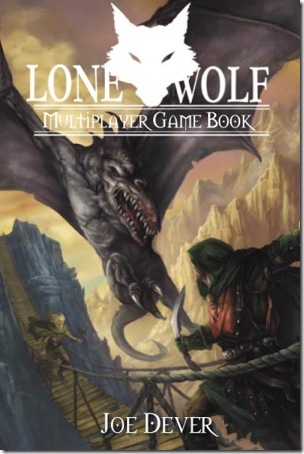
Review: Lone Wolf Multiplayer Game Book and Heroes of Magnamund

Fuente:


Información:

Review: Lone Wolf Multiplayer Game Book and Heroes of Magnamund

2

Category : News, Reviews & Culture, Other Systems, RPG, Reviews & First Looks

If you're new here, you may want to subscribe to our RSS feed. Thanks for visiting!


Lone WolfI still have very fond memories of the Lone Wolf game books I lent from my friend Sven back when we were still in school. The Lone Wolf books focus on the world of Magnamund, where the forces of good and evil fighting over control. The protagonist is Lone Wolf, the last member of the Kai Lords, a caste of warrior monks. Since it’s a game book the player is in control of Lone Wolf’s actions. That is you can regularly make decisions on what to do, which changes the story and the outcome of the book.

The system (if you would call it such) was extremely easy and involved rolls with a d10 to determine if certain actions were successful or not. Most players probably used the Random Number Table provided in the book to generate random number, but you could also easily use a ten-sided die to do the same.

Recently Mongoose Publishing has released a game that surprised me a lot. It’s called “Lone Wolf Multiplayer Game Book” and is written by Matthew Sprange and Joe Dever, author of the original game books. The 114-paged book is a true pen & paper roleplaying game using the simple rules from the game book for tabletop gaming. Although this sounds like a crackpot idea at first, especially new players and fans of rules-lite systems will love it.

As in the original game book series, you play one of the Kai Lords. Each character has a Combat Skill and Endurance value which are used in combat, a couple of Kai Disciplines (like “Mind over Matter”, “Animal Kinship”, or Weaponskill), up to two weapons and up to eight miscellaneous items and that’s it. As I mentioned before, the system is as barebones as it gets.

In combat the combat skills of your character and your opponent are compared and you roll on the Combat Ratio chart to determine how many Endurance you and your opponent lose. Doing other tests usually involves rolling a d10, is your roll result higher than a set Difficulty by the GM you succeed.

The Gamemaster section of the book does a good job explaining what a GM does and also contains a list of monsters for the players to fight. The book also contains a quite detailed description of the history of Magnamund, and some details about the world including a map. The background definitely isn’t as deep and complex as many other campaign settings, but especially if you loved the game books back in the day, you probably won’t mind. I have to admit I picked up that game mainly because I had nostalgic feelings toward the series.

The layout is clean although I would have preferred a more classic two-columned layout. Both cover artwork and the interior illustrations are of a good quality although not really overwhelming. The look reminded me a lot of the game books itself and I am sure this was intended.

All in all the Lone Wolf Multiplayer Game Book is an interesting game which should appeal to most fans of the original series and people who want to give roleplaying a try without having to bother with complex rules. The book contains everything players and GMs need to run a game set into the world of Magnamund although only Kai Lord characters are playable using the core book.

Heroes of MagnamundHere’s where the supplement “Heroes of Magnamund” comes into play. The 148-paged book introduces a couple of new character classes including the Border Ranger of the North, the Dwarven Gunner of Bor or the Knight of the White Mountain.

Every class has a list of special abilities much like the Kai Disciplines, get’s to choose from several sets of starting equipment and comes with several pages of description of the class. The book also provides a character sheet for every class. The new classes add a lot of depth to the game and the world without adding too many new rules. The list of classes is also varied enough, so that everyone should find a character he wants to play.

Heroes of Magnamund also provides new weapons, armor and equipment. I wholeheartedly recommend anyone to pick up Heroes of Magnamund if he already enjoys the core game because it adds a whole plethora of new options for players.

Even if you are not interested in using the rules provided in the Lone Wolf Multiplayer Game Book you can easily use the information in those two books to run a Magnamund campaign in the game of your choice. I am sure a Savage Worlds conversion for example should be very easy to do.

Together with the supplement Heroes of Magnamund, the Lone Wolf Multiplayer Game Book is a valid alternative to other rules-lite fantasy games. Especially if you’re a fan of the original game book series, you should give this game a chance. You won’t be disappointed. Both books are available in print and as digital downloads. The PDFs set you back $11.99 each and are available from DriveThruRPG.

Please note that this review is based on reading through the PDF versions of the both books. My copy of Heroes of Magnamund has been provided by the publisher.

El tonto invento del correo electrónico

Fuente:


Información:

CEROS Y UNOS

El tonto invento del correo electrónico

Por Daniel Rodríguez Herrera

El correo electrónico se inventó en los años 60, en los primeros ordenadores que contaban con un sistema operativo que permitía el uso compartido. En estas computadoras, te conectabas con un terminal y parecías tener a tu disposición un ordenador completo, pero en realidad era una simulación; había un buen número de personas haciendo lo mismo que tú.

En cualquier caso, aquellos sistemas de mensajes eran más bien limitadillos, porque sólo podías enviarlos a otros usuarios de la misma computadora. Tenían su utilidad en cualquier caso, de modo que todos los sistemas contaban con uno. Pero a nadie se le había ocurrido ampliarlos para enviar mensajes a otros ordenadores. La razón era evidente: no había redes que los conectaran unos a otros.

Pero entonces llegó Arpanet, de modo que no hubo que esperar mucho para que a alguien se le ocurriera. Fue un ingeniero de BBN, la pequeña consultora que se encargó de construir la red, llamado Ray Tomlinson a quien se le encendió la bombilla. Estaba trabajando a finales de 1971 con un programa para transferir ficheros entre ordenadores de la red llamado Cpynet además de mejorar el programa que dejaba mensajes electrónicos a usuarios del mismo ordenador, cuando se le ocurrió juntarlos. Al fin y al cabo, un mensaje no deja de ser un fichero.

Técnicamente aquello era una chorrada. El programa de mensajería detectaba que el usuario no era de la misma máquina y usaba Cpynet para enviarlo a otro ordenador. Este otro ordenador lo recibía y lo trataba como si fuera un mensaje interno, dejándolo en el buzón del interesado. Pero muchos grandes inventos no son grandes avances técnicos. Tomlinson ni siquiera se acuerda de cuál fue el primer mensaje que surcó la red porque eran envíos de prueba, hechos entre dos ordenadores PDP-10 situados físicamente uno junto a otro pero conectados sólo a través de Arpanet. Piensa que seguramente sería algo así como "QWERTYUIOP". Pero que ni idea, oigan.

Quizá la decisión más duradera de Tomlinson fue la de usar la arroba para separar el nombre del usuario del nombre de la máquina a la que debía enviarse. Y no es que se lo pensara mucho: simplemente revisó el teclado, vio la @ ahí y pensó: "Bueno, esto no se usa para nada más, así que ya está". Lo cual no era del todo cierto, pues un sistema operativo relativamente popular entonces, Multics, lo empleaba para borrar la línea que se estaba escribiendo, así que los usuarios del mismo intentaban escribir pepito@maquinita y al llegar a la arroba desaparecía todo lo que habían escrito antes, dejándolo sólo en "maquinita". Pero claro, Tomlinson no usaba Multics.

El invento, no obstante, no se extendió mucho hasta el verano siguiente. Mientras se escribía la definición final del protocolo de transferencia de ficheros, el FTP, alguien que conocía el trabajo de Tomlinson sugirió incluirlo en la especificación. Y así se hizo, de modo que los programas para enviar mensajes comenzaron a popularizarse hasta el punto de que en 1973 un estudio indicó que el 75% de todo el tráfico de Arpanet eran correos electrónicos. Por fin le habían encontrado un uso a la red.

Uno de los mayores usuarios de la red era el jefazo de ARPA por aquel entonces, Stephen Lukasik, quien incluso se llevaba un ordenador portable –me niego a llamarlo portátil– fabricado por Texas Instruments con el que podía conectarse y descargar su correo. Aquel amor por la red le vino muy bien a Arpanet, proyecto que vio casi duplicado su presupuesto. Un día se quejó a Larry Roberts, el principal responsable de la creación de la red, de lo incómodo que resultaba el manejo del email y éste regresó al día siguiente con un programa que había hecho en un día y que permitía seleccionar grupos de mensajes, archivarlos, borrarlos, etc. Había nacido el primer gestor de correo. Se llamaba RD. Pronto fue mejorado y finalmente uno llamado MSG se convirtió en algo que podría llamarse estándar de facto. ¿Por qué? Porque su creador, John Vittal, había tenido una idea feliz: un comando para contestar a un mensaje, sin necesidad de volver a teclear su dirección y cometer el riesgo de equivocarte.

Con el uso cada vez más extendido del correo electrónico y la infinidad de programas que aparecieron para gestionarlo, algunos de ellos incompatibles entre sí, había que poner orden. El 7 de junio de 1975 se creó la primera lista de correo para tratar estos temas: Message Services Group, que con esa tendencia a acortar nombres tan propia del gremio sería más conocido como MsgGroup. No fue la única lista ni la más popular, honor reservado a la dedicada a los aficionados a la ciencia ficción, pero sí la que más importancia tuvo y donde tuvieron lugar las primeras flame wars, o peleas a cara de perro vía mensajería electrónica.

La primera discusión importante, que hizo correr ríos de bits, fue, lo crean o no, sobre las cabeceras de los mensajes. Cuando se envía un correo electrónico, además del mensaje, se manda una serie de líneas de texto llamadas cabeceras. Las más conocidas y útiles son el asunto del mensaje, el emisor y el o los receptores. Pero hay muchísimas más, como se puede comprobar si se lee el código fuente del mensaje. Al principio los lectores mostraban todas, y algunos programas de envío mandaban cosas tan esotéricas como la fase de la luna en el momento de escribir el mensaje y cosas así, por lo que muchos querían imponer unos límites, mientras otros lo consideraban poco menos que un asalto contra la libertad de expresión.

Tanto era así que como MsgGroup era una lista moderada, y los mensajes más agresivos no pasaban el filtro, se montó otra sin censura llamada Header People cuyos miembros, según dijo uno en su momento, se ponían calzoncillos de amianto para poder participar en ella. Así somos a veces los informáticos, puristas hasta la náusea con las mayores tonterías. El problema finalmente se resolvió señalando unas pocas cabeceras obligatorias e indicando que las demás podían ser ocultadas al leer los mensajes; vamos, como estamos ahora.

Con el tiempo, a finales de los 70, se propondría el uso de emoticonos, esas caras sonrientes y guiños hechos con paréntesis y guiones, para evitar malentendidos y que algunas cosas que decimos en los mensajes se tomen demasiado en serio. Incluso se hizo una guía de "netiqueta", en la que ya se advertía que escribir en mayúsculas era equivalente a gritar y que convenía evitarlo. El correo electrónico fue lo que convirtió Arpanet en un éxito, y llevaría a la creación de otras redes y, finalmente, de internet. A la web todavía le faltaban unos cuantos años para dar sus primeros pasitos.