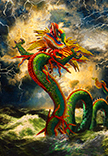
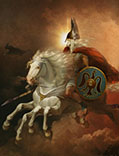
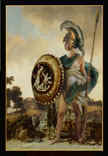
Mostrando entradas con la etiqueta Vikingos. Mostrar todas las entradas

sábado, 10 de abril de 2010

Hervor - Badass of the Week

Esta entrada es cortesía de Gonzalo, que me dio a conocer la web. ¡Gracias, Gonzalo!

Enlace:

http://www.badassoftheweek.com/hervor.html

Texto:

Hervor

"My your ribs writhe with worms, may your barrow be an anthill where you rot, unless you speak with me, sons of Arngrim, all girt with battle-gear, keen blades at your sides and bright spears stained with blood. Death has made you cowards, but I have kin-right here. I come for the sword made by Dvalin. Why should dead hands hold the blade?"


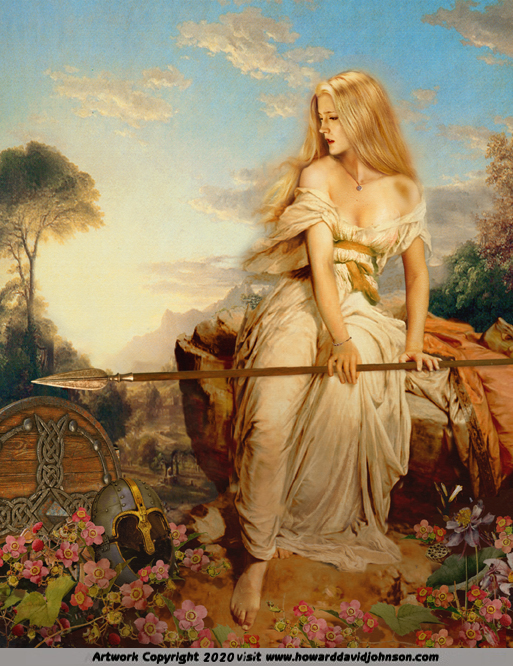
Hervor was a powerful, fearless Viking warrior woman who didn't take crap from anyone – living or dead – avenged her father's death with a magical sword, led Norse raiding parties in the pillage and plunder of unsuspecting civilizations, and proved to everyone under her command that she had bigger, brassier balls than any other Viking warrior in Norway.

Hervor's father was a great Viking warrior, and her mother's father was a head-splitting insane-o-bot berserker, so she didn't really have a chance to become anything other than a completely over-the-top assbeater. She was born not long after her father was gloriously slain in a Valhalla-approved bloody mess, dying with another warrior's sword lodged in his abdomen. Everyone who knew Hervor's dad knew that the guy was kind of a bloodthirsty murder-machine, so when the young girl was born her frightened neighbors all suggested that the best course of action might well have been to just take the baby out into the woods and leave it to be eaten by wild dogs. This didn't happen, and Hervor grew up pretty much exactly the way everyone was worried she might. She was tall, strong, and tough as hell, with reddish-gold hair and a sword arm that wouldn't quit. At a time when other girls in her village were learning how to knit and weave and paint pots and do other boring nonsense, Hervor was practicing horsemanship, archery, and swordfighting, routinely beating the neighbor boys into crumpled heaps or sending them running home to their mommies with black eyes and broken bones.


Hervor decided she didn't really want to settle down and be a bored housewife when she was obviously so adept at rendering grown-ass men unconscious with a few well-placed sword blows to the throat, so she decided to forgo the homemaker profession for a while and become a badass shieldmaiden instead. Now, I talk about the shieldmaidens briefly in my book (insert imperceptibly-subtle-yet-shameless self-promotion here), but the short version is that they were hardcore warrior-women who strapped on the chainmail, grabbed a spear, and spent the warm summer months sailing around on Drakkar longships getting their rape, plunder, and pillage on whenever the opportunity presents itself. I should note that I use the word "rape" here in the old-school manner meaning, "to seize or take away by force", rather than the more commonly-used definition, though I suppose you can never really be sure when you're talking about Vikings of any gender. Regardless of the verbiage, Hervor was really awesome at it, because she was so tough, daring, and charismatic that after the leader of her village's raiding party was killed in battle the other Vikings nominated her to take his place and lead them to wealth and victory.

Hervor didn't disappoint – she and her salty sea-dogs looted unsuspecting villages with the best of them, and she won honor and glory at the pointy edge of her blade. However, one thing was still really bugging the shit out of her: Her father was famous not only for cleaving people from head-to-groin with mighty sword-strokes, but for carrying an incredibly bitchin' epic-level +5 sword known as Tyrfing, and she wanted to get in on that action ASAP. Tyrfing was an insanely-hardcore weapon that, according to legend, had been constructed by the Dwerger in their magical subterranean fires of intense awesomeness. This Dwarf-forged sword had a hilt fashioned of solid gold, and was so deadly that so much as a nick from the blade was universally fatal. However, there's a catch – the blade was cursed. It was more bloodthirsty than a school of mutant man-eating Great Whites having a feeding frenzy in chummed-up water, and every time it was drawn from its scabbard it consumed a life – either in battle, or by driving the wielder insane and forcing him to slaughter one of his own friends. After Hervor's dad's death, the blade was considered so unlucky and dangerous that it was buried with him, presumably never to be used again. Hervor had other ideas. This kickass blade was her inheritance, and she certainly killed enough people to make it well worth its while, and she was determined to recover the heirloom. One day, in between raids, she and her crew sailed out to the island where her father was buried with the intention of recovering Tyrfing.


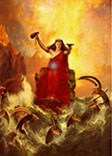
This is supposed to be a picture of the Dwarves handing Tyrfing over to Hervor's father,
though honestly I really have no damn clue what the hell is going on here.


So Hervor and her homeskillets arrive at this totally creepy island in the middle of the night, and the first things they notice are huge-ass fires and ghosts flying around all over the place like crazy. Every man under her command completely soiled their loincloths and refused to get out of the ship, fearing that the grounds were more haunted than Dracula's underwear. Hervor proved that she was the only Viking with the balls to set foot on the spooky island, jumping down, politely informing her colleagues that they're all total pussies, and then confidently walking over to the funeral mound where her father's corpse lay. Then, just to further demonstrate the fact that this sword-chucking chick wasn't scared of anything, she started yelling out insults and curses to call her dead dad back from beyond the grave. Dad responded by throwing up a huge curtain of fire outside his funeral mount, but Hervor just jumped through the flames and reiterated the fact that she wasn't fucking leaving without her sword.

That was it. She had now summoned the dead, and the next thing you know she was staring into the lifeless eyes of the ghosts of her father and uncles, all decked out in their full battle gear looking pissed. They tell her there's no fucking way she's getting Tyrfing – this thing is cursed as hell, and will bring doom and ruin on her family. Hervor could give a rat's ass. She tells this army of angry spear-toting ghosts that magical swords are no good to dead men, so fork that shit over before she has to start cracking poltergeist skulls together until they explode into protoplasm. Hervor's dad, understandably impressed with his daughter's moxie, reveals the blade – it's in a pit of fire, surrounded by angry ghosts who arbitrarily hate her. Hervor doesn't give a shit. She walks over, ignores the ghosts, sticks her hand in the fire, pulls out Tyrfing, gives everyone the double-middle-fingers, and goes back to her ship, only to find that her associates had already left her because they were pussies. The big, bad Vikings had watched from the shore when the fires and ghost activity became more epic, and ran for it like scared little bitches. Hervor found a way off the island (the sources aren't specific as to how), got back to her homeland, and continued her career as a war-band leader.


Hervor served as an inspiration for the Eowyn character in Tolkien's Lord of the Rings trilogy.


With Tyrfing at her side, Hervor became even more unstoppable in combat. In comic book terms, this weapon made her go from regular Jean Grey to Dark Phoenix, and it wasn't long before she was well-known as a murderous asskicker that lived to torment to coasts of Scandinavia, England, and Europe with her vicious sword of face-bifurcating. Of course, Tyrfing also did its thing and made her kind of become completely brutally insane. Like, one time she was chilling out playing dice with the King of Norway, when some douchebag started futzing with the sword, so Hervor freaked out and murdered the dude right in the middle of the royal throne room. I'd like to think that it was so hardcore that everyone clapped rather than arrest her, because if anyone can appreciate that shit, it's the Vikings.

Hervor eventually settled down, got married, and had a couple kids. Her son Heidrik inherited Tyrfing, and its bloodlusting effects seemed to affect him a lot more than his mom. Heidrik ended up murdering his brother and his foster son with it, and eventually died in battle surrounded by a bunch of dead Huns (Heidrik's own daughter, who was named Hervor after her grandma, also fought as a shieldmaiden in the battle and was killed in action). Heidrik married a princess, though, so his life wasn't all about agony and misery and being stabbed to death by Huns.

We don't really know what happened to Hervor after her son inherited Tyrfing. Some say she died in combat while fighting in a war of vengeance, and others claim she just grew old and died a peaceful, boring death at home. A later saga briefly mentions a mysterious Valkyrie named Hervor, so it's presumably also possible that this war-chief's awesomeness helped her ascend to semi-goddesshood. That would be pretty much super-kickass.


Hervor Junior dying amid some slaughtered Hunnic warriors.


Links:

Northvegr Saga The Lay of Hervor

The Poetic Edda


Sources:

Barring-Gould, Sabine. A Book of Folklore BiblioBazaar, 2007.

Belloni Du Chaillu, Paul. Ivar the Viking Scribner, 1910.

Monaghan,Patricia. Encyclopedia of Goddesses and Heroines ABC-CLIO, 2009.

Tilton, Lois. Written in Venom. Wildside, 2000.

jueves, 11 de marzo de 2010

Heathen Humility

Fuente:

http://wyrdmeginthew.blogspot.com/2010/03/heathen-humility.html

Texto:

Wednesday, March 10, 2010

Heathen Humility

Things are not always as they seem. They say humility is foreign to heathenism. Bullshit. Humility is the very heart of heathenism, the ground from which we brag.

It is Rome that is arrogant, in its imperial and its religious forms. It is Rome which constructs a great chain of being with human beings at the top, little lower than the angels.

We are heathen. We are of the earth. We humble our humanity before weeds, trees, rivers, stones. Teachers reside there. Great elfin beings of shine and marvel tend these flocks. There is grandeur in a simple field of corn and grass. The wind blows, and we know Odin's thoughts wander about the earth.

We are beings of the heart. Our hearts are not debased by bowing before the humble things of this earth. We are trees transformed. We are bread and meal and milk drawn up through earthen flesh into bone and blood bodies spiralling with stars in our heads. God is mad, wild, uncanny. Enchantment lies deep in the heart of things. This is how it belongs. This is how it should be.

Because we have roots, we have crowns as well. Because our trunks stand firmly in the ground, our branches frame the blue swept heavens. We may nest in the mustard and oats and speak great soliloquoys, often of silence. Guttural sounds and gurglings of rivers emerge from our throats, and we are proud to speak them. We too have wildness within us in our hearts.

The old ones said, cities are web-lairs of tomb-beings, crafted by giants of old. They hold no ancient wildness. They are warp, not wyrd. Only faintly wyrd whispers in such tomb-lands. If you would know the guardian who wards you, you must find her at the edge, beyond the hedge, out in wild lands where she roams free. You must roam free to see her. Her beastly guise speaks in growls and chirps your original nature (orlog). How has happenstance (wyrd) brought forth or warped that nature within you? Your city-self obscures your true nature.

Out into the woods -- it may be a mere patch of vacant land where unwanted herbs grow -- sit out. Sit out and silent begin to woo. Woo her who watches. Woo her who sings softly in the distance. Woo her who knows, and shed city-self layers like petals from a dead and dried blossom, like husks from old corn to find the green beneath.

Herbs and worts say, we are real. They say, we speak. Herbs and worts say, come to us. You could hardly think them unholy. Once they gathered in force and gave oaths, oaths to never harm the best and brightest, the cleanest and most pure, the wisest and most just. They were there and you were not, to have honor to give such oaths, and they held to them. When Beloved Mother Earth called from her high seat in the heavens, where she and her husband sip mead over atmospheric billows, faithfully they came. Faithfully they swore. Faithfully they upheld. Such honors they are still proud of. They have won their merits and have pedigree beyond your imagine. Blur eyes and see medals and heraldry totemically stretching back in great pride of heritage and story long before humans melted out of the trees. We are real, they say. We speak, and this is no "metaphor". This is no quaint little story. This is spiritual reality. We are embodiment and process of powers. Heed us.

That will make you humble your city-self. It is but a skin, with brightness beneath if you would dare. You may feel your sanity peeling. Beneath that underneath madness lies sanity cleaner and more vibrant than you have ever known. Such humility is befitting a heathen. Its heritage is something of which to be immensely proud. May you be as whole as your hearty humility!

viernes, 4 de diciembre de 2009

Dioses Nórdicos - Secretos Oscuros

Fuente:

http://www.oscurossecretos.com.ar/dioses-nordicos

Texto:

Los dioses nórdicos aparecen divididos en dos familias o categorías: los Ases (habitantes de Asgard) y los Vanes (que viven en Vanaheim).

Nanna:
Diosa Aesir, esposa de Balder y madre de Forseti. Después de la muerte de Balder, Nanna muere de pena moral y su funeral toma lugar en una hoguera cerca de su hijo.

Njord, Njörd, Njöror:
Dios Vanir de los mares, los vientos, el fuego y la fertilidad. Se dice que trae el buen clima, la buena suerte en la navegación y en la cacería. Cuando en altamar el viento ataca de manera bestial, los navegantes invocan su nombre, aplacando de esta forma la ira del dios Aegir. Le gusta vivir en las orillas del mar, es el esposo de la giganta Skadi, y tienen dos hijos, Freyr y Freya.

Odín, Woden, Wotan, Wodan:
El supremo de todos los dioses nórdicos. El principal de los dioses Aesir. Hijo de Bor y Bestla. Es llamado también Alfadir (el Padre-de-Todos), debido a que es el padre de todas las deidades nórdicas. Su nombre, parece derivarse de un vocablo que significa viento, aliento, alma. Junto con Frigg (su concubina favorita, y con la única que compartió el Hlidskjalf), son los padres de Balder, Hod y Hermod. También tuvo a su más poderoso hijo Thor, de la diosa Jord. Y de la giganta Grid, engendró a su hijo Vidar.

Dentro de las muchas facetas en las que este dios es enmarcado las más importantes son: dios de la guerra, de la muerte, de la sabiduría (inteligencia) y la poesía. Además, se le asignan las características de: elocuente, multiforme (ya que puede transformarse en lo que desee), mago, legislador (puede dictar leyes de conducta social), entre otras.

Se colgó del Yggdrasil (árbol universal que soporta los nueve mundos) durante nueve días, y ahí aprendió nueve poderosas canciones y creó dieciocho runas.

Su recinto en el Asgard se llama Valaskjalf, donde se encuentra su trono llamado Hlidskjalf. Desde éste, él observa lo que acontece en los nueve mundos, usando como espías o extensión de sus ojos y oídos a sus dos cuervos Huginn (que significa el Pensamiento) y Muninn (que significa la Memoria).

A parte de sus dos cuervos, dentro de sus pertenencias favoritas fuguran: una lanza llamada Gungnir, la cual nunca falla el golpe; un anillo llamado Draupnir, del cual cada novena noche, ocho nuevos anillos nacen; un caballo de ocho patas llamado Sleipnir; dos lobos, el primero se llama Freki (el Feroz) y el segundo es conocido como Geri (el Ávido). Se dice que Odín da su comida a estos dos animales ya que el sólo se alimenta de vino.

Wodan posee un solo ojo que resplandece como el sol, el otro lo sacrificó para poder beber del "pozo de Mimir", el cual le otorgó inmensa sabiduría.

Tuvo otro hijo con la giganta Rind llamado Vali.
El día del Ragnarok, Odín será asesinado por el lobo Fenrir.

Ran:
Esposa de Aegir, posiblemente su hermana también. Es una divinidad de los mares y de las tormentas marinas. Se dice que recoge a los ahogados en su red, para llevarlos al reino de los muertos que está situado en el fondo del mar (los ahogados no van ni al Valhalla ni al Helheim). Con Aegir tuvo nueve hijas conocidas como las "Nueve Olas", que siempre visten trajes y velos blancos.

Sif:
La esposa de cabellos dorados del dios Thor. No se conoce mucho acerca de ella. Pudo haber sido originalmente una diosa Aesir de la fertilidad. Es la madre del dios Ull.

Skadi, Skaoi:
Hija del gigante Thiazzi y esposa de Njord. Ella es la diosa del invierno, de los cazadores y de los esquiadores. Con su esposo Njord tuvo problemas. Mientras ella quería vivir en las montañas de Thrymheim, su esposo prefería vivir en su palacio "Noatun", que estaba situado en las orillas del mar. Sin embargo, acordaron permanecer nueve días en las montañas, luego otros nueve en Noatun, y así sucesivamente. Este trato no tuvo mucho resultado, por lo cual se separaron. Después de esta separación, Skadi se casó por segunda vez con el dios Ull.

Thor, Donar:
Es el dios nórdico del trueno. Hijo de Odín y Jord. Uno de los más poderosos dioses Aesir. Se casó con la giganta Jarnsaxa, y después con Sif.

Sus hijos con Jarnsaxa son: Magni (la fuerza) y Modi (la furia). Y de la diosa Sif consiguió a su hija Thrud.

A menudo Donar es descrito como un dios de barba roja, ojos como el rayo, guantes de hierro (que le permiten agarrar su martillo llamado "Mjolnir" sin hacerse ningún daño; además, sin ellos puestos, es imposible levantar el Mjolnir), un cinturón mágico llamado "Megingjard" (el cual duplicaba su fuerza) y estatura colosal.

Él es el único dios al que no se le permite cruzar el "Bifrost" (puente que conectaba el Midgard con el Asgard. Este puente no es más que el mismo Arcoiris), por miedo a que sus pisadas que son los truenos, puedan destruirlo.

Goza de un palacio en el Asgard llamado "Bilskirnir", ubicado en una región conocida como Thurdheim.

Los nórdicos piensan que las tormentas eléctricas, son causadas por Thor, que cabalga en su carruaje tirado por dos cabras cuyos nombres son Tanngrisni y Tanngnost; y los rayos y los truenos son debidos a que Thor está arrojando el Mjolnir por donde va pasando.

Su más grande enemigo es Jormungand (la gigantesca serpiente del Midgard). El día del Ragnarok, Thor la asesinará, pero también morirá por el veneno de ésta.

Tiuz,Tyr, Tiw, Ziu:
En el medioevo, los alemanes del sur lo llamaron Ziu; los del norte, Tiuz; los escandinavos, Tyr; y los sajones, Tiw.

Dios de la guerra, del honor marcial, una deidad del cielo y el más valiente de todos los dioses. Se dice que es el dios patrono de las espadas, de la justicia y de los buenos convenios. A él se le dice el dios de una sola mano, debido a que el gigante, fuerte y poderoso lobo Fenrir, le arrancó su mano derecha cuando Tyr una vez lo amarró, para que no continuara ocasionando estragos.

De él también es dicho que en algún tiempo fue más importante y más antiguo que el mismo Odín; sin embargo, con el pasar del tiempo, los mitos nórdicos se fueron guardando, y la importancia de este dios fue disminuyendo, hasta tal punto que hoy en día, no se recuerda mucho acerca de Tyr. Otras versiones cuentan la historia que Tiuz fue hijo de Odín y de la diosa Frigg. Su atributo más importante es una lanza, que a parte de arma, simboliza la justicia.

Ull, Ullr:
Su nombre quiere decir "El Glorioso". Es hijo de la diosa Sif, hijastro de Thor y segundo esposo de Skadi.

Es algo confuso el relacionar al dios Aesir Ull como una deidad de "x" o "y" cosa. En general, la mayoría de las fuentes lo enmarcan como un dios del invierno; más específicamente, deidad de la caza, de los lugares helados, del arco y del escudo; que ama recorrer los lugares gélidos, con la ayuda de unos zapatos especiales para la nieve; hoy conocidos con el nombre de "esquís".

En los mitos escandinavos; sin embargo, se dice que es un dios de la justicia, los duelos y el patrono de la agricultura. Domina las artes del esquí sobre la nieve y la arquería. Su recinto es un lugar llamado "Ydalir".

Otras fuentes dicen de él, que era una deidad más que todo, relacionada con las artes mágicas.

Vali:
Hijo de Odín y Rind (Rinda). Él es el dios Aesir que representa la venganza, y junto con Vidar, representaba de igual forma, las fuerzas inmortales de la naturaleza. Se le representaba con un arco, el cual lanzaba energía vital por todo el Midgard.

Él vengó la muerte de Balder, ocasionada sin intención por Hodur, hermano gemelo de Balder.

Vidar:
Hijo de Odín y de la giganta Grid (Gridr). Su rasgo más peculiar, es que casi nunca habla, por esta razón se le dice: "el dios silencioso"; simbolizando el silencio; y por otro lado, simbolizando la venganza, porque el día del Ragnarok, su padre Odín será asesinado por el lobo Fenrir, y entonces será el Aesir Vidar, el encargado de asesinar con sus solas manos a Fenrir, en retaliación por lo sucedido a su padre.

Se dice de él, que también es un dios extremadamente fuerte, por este motivo, es símbolo de la fuerza bruta. Después de Thor, Vidar es el segundo más fuerte (físicamente), entre los dioses nórdicos.

martes, 27 de octubre de 2009

Libro: Hombres del Norte - El Drakkar

NOTA: Para bajar el libro usa el enlace de descarga que yo adjunto, no el del artículo.

Es posible que necesites registrarte para bajarlo. Pero créeme: Merece la pena.

Enlace al libro:

http://www.bubok.com/libros/13711/Hombres-del-Norte

Enlace al artículo:

http://eldrakkar.blogspot.com/2009/10/libro-hombres-del-norte.html

Texto:

martes 27 de octubre de 2009

Libro: Hombres del Norte


Hombres del Norte
Oscar Zunino
163 páginas.
Descarga gratuita en Bubok.
INDICE
PARTE PRIMERA: MITOLOGÍA NÓRDICA
Introducción
Los Aesir
Los Vanir
Poesía Antiguo-Nordica
Las Nornas
Las Valkirias
Jotun, Los Gigantes
Los Enanos
Bestias
Lugares Mitológicos
Artefactos

PARTE SEGUNDA: BREVE HISTORIA DE LOS VIKINGOS

lunes, 26 de octubre de 2009

Ancient cult of the Viking kings

Fuentes:

http://www.grahamhancock.com/news/index.php?node=15360

http://www.cphpost.dk/culture/denmark-through-the-looking-glass/47182-ancient-cult-of-the-viking-kings.html

Información:

Ancient cult of the Viking kings


Could a large mud building unearthed in Lejre have been a cult place or beer hall of the ancient Viking kings?

The hall, 48 metres long and seven metres across, overlooks the site of a Viking palace unearthed in 1986 in what is an historic area of Denmark.

‘We are sure we have found a royal building of some sort,’ said Tom Christensen, curator of Roskilde Museum at the time. ‘The odd thing about the site is that it is littered with bits and pieces of exquisite golden jewellery, glass and bronze broaches, high quality artifacts, such as drinking glasses and ceramics, which all seem to have been deliberately smashed in some ritual.’

====================================================================

Ancient cult of the Viking kings

E-mail Print

Could a large mud building unearthed in Lejre have been a cult place or beer hall of the ancient Viking kings?

The hall, 48 metres long and seven metres across, overlooks the site of a Viking palace unearthed in 1986 in what is an historic area of Denmark.

‘We are sure we have found a royal building of some sort,’ said Tom Christensen, curator of Roskilde Museum at the time. ‘The odd thing about the site is that it is littered with bits and pieces of exquisite golden jewellery, glass and bronze broaches, high quality artifacts, such as drinking glasses and ceramics, which all seem to have been deliberately smashed in some ritual.’

‘There is also a huge pile of cooking stones from primitive ovens. This was obviously a place frequented by the upper classes of the Iron Age. Maybe it was some sort of beer hall or a sacred site where cult or religious activities were carried out. The building’s post holes are over a metre deep, so it must have been an impressive construction,’ said Christensen.

A large part of the rolling countryside around the hamlet of Lejre, near the cathedral town of Roskilde, an area which abounds in ancient burial mounds and Viking stone tombs, has been designated as an archaeological site.

Here, archaeologists have been excavating since 1986 in the hope of finding the ancient seat of Denmark’s first Viking kings. The sagas say that Leje was the chief city of Denmark’s first Viking royal family – the Skjold, or in English ‘Scylding’ dynasty – dating back to around AD 400-500. Nordic myths tell us that King Skjold, which means ‘shield’ in Danish, was so named because he made his first mysterious appearance asleep in a boat, lying on his shield.

The Scylding dynasty lasted at least a century, through Skjold’s successors Halfdan, Roar, Helge and Rolf Krake. The oldest known reference to the dynasty’s heroic and bloody exploits is in the eighth century Anglo-Saxon epic poem ‘Beowulf’, often called the first major work of English literature.

Set in the period of the Germanic migrations in the fourth to seventh centuries, the poem places the Scylding King Hrothgar’s Hall, Hereot, at Lejre, while Saxo Grammaticus, a 13th century chronicler who compiled a history of both legendary and historical Danish kings, also identified Lejre as an ancient royal seat.

Many modern Beowulf scholars identify Hereot with Lejre and, with the discovery of the hall, Danish archaeologists believed they had finally found the site. ‘The date of the cult place fits perfectly with the era of the Scyldings,’ Christensen said.

In 1986 archaeologists discovered a major upturned boat-shaped Viking longhouse, but only the foundations of the huge hall and outhouses remained as the original construction had been of wood. The 50-metre-long, 10-metre-high longhouse was twice the size of any similar hall discovered in Denmark, leading archaeologists to believe they had stumbled on a royal palace from the time of the sagas.

The dimensions of the hall were calculated from 200 posthole marks on the ground from the huge oak beams that supported the walls and roof. There were signs on the site of earlier constructions, dams, windmills and other buildings including a bronze foundry, workshops and outlining fencing, underlining the importance of the Lejre settlement.

A museum now occupies a plot of land near the site. The English web address for the Lejre Museum is www.english.lejre-centre.dk

domingo, 25 de octubre de 2009

Fire in Northern mythology - Gangleri.nl

Fuente:

http://www.gangleri.nl/articles/67/fire-in-northern-mythology

Información:

Fire in Northern mythology

Fire, a concept that is very present in Northern mythology and also a concept that I have broken my head over for some time now. The symbology is multi-layered and however I still haven’t fully worked out the subject, I want to present some thoughts and come to an interpretation of some elements of Northern mythology.

Creation

There are two primal forces in Nordic myths, two forces that are known under the names, “fire” and “ice”. Before there was anything, there was Ginungagap, a “yawning gap”. In the south of it, fire ‘resided’ and in the north, ice. When these two came together, everything started. So, fire is the primal force, one side of the Divine. Some symbology!

It is not strange that fire keeps coming back in the symbology of Nordic mythology. What may be strange is that fire is much better represented than ice, but this is not the subject of this article.

Later in the creation myth, the triple divinity Odin, Hænir (sometimes Hoenir, or Hnir) and Lodur give capacities and make man. “Spirit gave Odin, “óður” gave Hoenir, “lá” gave Lodur and the form of gods”. This is how Rydberg translates Völuspa 18. More often you will read something like “Soul gave Othin, sense gave Hnir, Heat gave Lothur and goodly hue”. (Ari Odhinnsen) In the Prose Edda it is Odin, Vili and Vé who are the givers of these things.

Loki

Lodur is often said to be Loki. In the preface to the Reginsmal Odin, Hænir and Loki are named together, so this is not strange. Loki is the most famous of ‘fire Gods’ from the Northern pantheon. The name Loki has been explained in different ways of which two are most interesting in our story. “Logi” supposedly means “flame” and the terms “liuhan” (Gothic) and “lecht” (Anglo-Saxon) are linked to the English word “light”, but also to the term “flame”. The same goes for the term “Lód”.

Fiery triplicity

When you think of it, there are three Gods connected to the concept of fire and also connected to eachother: Heimdallr, Balder and Loki. Heimdallr is the “white As”, the watchman on the Bifrost bridge and is therefor the middleman between the world of men and the world of the Gods. Heimdallr is not only the connecting smoke-pillar representing the Irminsul in the fire ritual, but also unchanging fire. He is the metaphysic flame, beyond time and space. In this regard Heimdallr can be equated with Brahman of the Hindus.

The second name that I mentioned is that of Balder. Balder is Heimdallr, but on another plane. We can place Heimdallr on the godly level, Balder on the human level and Loki on the underwordly level (or Asgard, Midgard and Utgard). Balder is the incarnated fire, the fire in ‘our world’ so to say. He is the warmth of our heart, the sun, the ancestral hearth-fire. To use another Hindu term, Balder may be seen as Atman.

I have already said a few things about Loki, but you can imagine that in regard of the previous, Loki is the destructive, incinerating, consuming fire. Loki is longing and desire.

When I draw this line further, I can say that Balder and Loki are dual aspects of Heimdallr, but on other levels.

Lightning

Lightning is often connected to fire and when I say lightning, I say Thor. Lightning is sparks of fire when Thor’s hammer hits something. The hammer makes an interesting connection, since with his Mjölnir, Thor kills giants (ice-giants!), but the Mjölnir is also connected with right (the judge’s hammer), consecration (for example of marriages) and initiations (a ‘higher’ form of consecration).

Ragnarök

To bring the above together, we get the following picture. Loki, the lower self, turns against the higher self (Balder), causing Ragnarök. During this Ragnarök, Thor kills the Midgard-snake (’manifestation’), Heimdallr (our divine spark) fights Loki and all this in order to have our higher self ‘become divine’ (in other words: to develop and realise our Balder to become Heimdallr).

An interesting point that does not fit completely in the above is that Surtr, the leader of the fire-giants who raise up to fight the Aesir, also seems to be the cause of the sparks coming from Muspelheimr and thus creation. During Ragnarök Surtr destroys the Bifrost-bridge (Heimdallr’s ‘domain’), kills Freyr and sets the world to flames. Whereas Heimdallr seems to be some ‘overhuman’ fire-aspect, Surtr is more of an ‘underhuman’ aspect. Both larger than our petty selves, but completely opposital. In this regard Surtr maybe represents the outside forces that try to disconnect us from our divine origin. Whatever we may call “evil” maybe. Surtr seems to have always been there and whereas Loki, Balder and Heimdallr are ‘part of us’, Surtr is not.

Of course there are more figures that can be connected to fire, but here I present a certain aspect that may shed light on some of the symbolism in Northern mythology.
-13/3/07-

24 May 2007

The nine worlds in nordic mythology - Gangleri.nl

Fuente:

http://www.gangleri.nl/articles/70/the-nine-worlds-in-nordic-mythology

Información:

The nine worlds in nordic mythology

I remember yet the giants of yore
Who gave me bread; in the days gone by
Nine worlds I knew, the nine in the Tree
With mighty roots beneath the mold.
(Völuspa 2, translated by Ari Óðinssen)

This is the second verse from the Poetic Edda. “Nine worlds I knew, nine in the Tree”. The nine worlds come back in Northern mythology more often, such as in Alvíssmál 9 in which the dwarf Alvis says: “All the nine worlds I have travelled over” and also Vafthrudnir has travelled to nine worlds (VafÞrúðnismál 43). Because the concept is rather vague, it has been open to speculation what exactly these nine worlds are. Óðinssen writes in a note to the quoted verse:

“Nine worlds are Asgarth, home of the Aesir,
Ljossalfheimr, home of the ljossalfar, or ‘light’ elves,
Mithgarth, ‘middle-ground’ home of mankind,
Vanaheimr, home of the Vanir, in this manuscript referred to by the Anglo-Saxon term Wanes,
Jotunheimr, home of the Jotnar, or ‘giants’,
Muspellheimr, firey region, home of Surt,
Svartalfheimr, home of the svartalfar, or ‘dark’ elves,
Niflheimr, bitter cold region,
Helgardhr, home of Hela and the newly dead”

And in this vein you can find much much more lists which all differ from eachother. A result of a quick scan of the internet:
Asgard, Vanaheim, Alfheim, Midgard, Jotunheim, Svartalfheim, Hel(heim), Niflheim, Muspelheim.
Nidavellir, Niflheim and Muspelheim are added, left out or replaced another world and even Yggdrasil (”the Tree” from Völuspa 2, the world-tree”) and Ginnungagap (the void that existed before creation) sometimes come up in lists!

Also you can see very nice depictions of the world-tree containing the nine worlds, but this is where the problems really start! Just a few examples:


All of these follow the idea of “Nine worlds I knew, nine in the Tree”, but there are also more schematic versions of the nine worlds.

As you can see the left picture by Francis Melville (I scanned it from his Book Of Runes) has ten worlds, the second picture from the left more lives upto the descriptions of the tree in the Edda with roots going everywhere, but also here, ten worlds of which only nine are numbered. The other two aren’t any clearer.

Yggdrasil is described in different places in the Edda under which in the Grimnismál. In the same text the domains of the different gods are named, which led people to conclude that the nine worlds can be found in the Grimnismál. This is not the case! As a matter of fact, the nine worlds are not named or explained anywhere in the ancient Nordic literature that came to us. Even when Gangleri asks Hár about other worlds than that of the gods in Gylfaginning 17, the answer is not what we are looking for. This is the major reason why people try to fill in the picture themself which as result: many different lists most of them without much explanation how people came up with the line that they give.

3×3

It may be a better idea to work the other way around. Most people will agree on the fact that the Nordic peoples had the numbers three and nine in high esteem. There are many threes and nines in the mythology. Both numbers come back in the worldview. The most simple division of the cosmos in the Northern mind is heaven, earth, underworld. It is only logical to use this division in regard of the nine worlds too. This brings us to another logical conclusion: there must be 3×3 worlds. Most people who write about the nine worlds do not pay attention to this logical thought of three times three. Two of these divisions in these three are easy; Asgard, the realm of the gods or the upper garden and Midgard, ‘our realm’ or the middle garden.

Asgard seems to have two meanings in the texts, both that of Asgard and Asaheimr (see below).

Midgard is mentioned in the story about creation in both the Prose Edda (Gylfaginning 9) and the Poetic Edda (Grimnismal 41). The latter says: “and of his [Ymir's] brows the gentle powers formed Midgard for the sons of men”. This is why Midgard of often bluntly said to be the realm of mankind. I will come back to this.

So what about the third cosmic area? The most common name for that is Utgard. This term also comes from the Prose Edda (Gylfaginning 45). Most scholars agree to this term, even though Utgard is not really a place, but a castle. As you may see in the images above, Utgard is not regarded as a ‘gard’, but the sum of different worlds. It is strange that Melville gives Asgard and Midgard and puts all the rest in, or as, Utgard.

In an online discussion about this subject, someone made the just remark that the lists are actually strange, because everybody uses different terms right through eachother. There are ‘gard’s (’gardens’), ‘heimr’ (worlds) and ‘hallr’ (halls). In this case all of the castles or places of the gods would be halls and the cosmic division of three, gardens. The nine worlds consequentally should all be worlds/heimr. A very interesting starting point, but it results in the conclusion that you will not easily find nine ‘heimr’ that logically fit in a nine-world-scheme.

What do we have to far?
In Asgard, we have the world of the Aesir, called “Asaheimr”. Asaheimr is named in the Ynglingasaga 2 (the first part of Snorri Sturluson’s Heimskringla or ‘history of the Norse kings’).
Second in Asgard is the world of the other gods: the Vanir and they live in Vanaheim. The term “Vanaheimr” also comes from the Ynglingasaga.
I will come back to the third heimr of Asgard later.

Midgard, in which we at least find the world of mankind and beings on ‘our plane’, suggestions below.

Utgard, the outer garden is the underworld with the ‘evil’ giants and Hel. Again see below.

Suggestions

In the earlier referred to discussion, somebody else gave this list:
“In ásgard we find: ásaheimr, valhöll and vanaheimr
In midgard we find: dvergheimr, mannaheimr and álfheimr (also svartalfheimr, mannaheimr and hvitalfheimr)
In útgard we find: muspellsheimr, hel and niflheimr”

In the ‘3×3 thought’ this is the best list so far. Some names do not need discussion, other might. As you can see they are all “heimr” instead of Walhalla. This ‘problem’ can be ‘fixed’ with a quote from the Grímnismál: “Gladsheim a fifth is called, there gold-bright Valhall rises peacefully, seen from afar” (verse 8). So if Walhalla is a part of Gladsheim we can use that term too.

Then we come to Midgard. I have not been able to locate the term “dvergheimr” (world of the dwarves) and “álfheimr” isn’t an often-used term either, but it is named in the earlier referred to Gylfaginning 17. Sometimes Alfheimr is divided in light and dark elves worlds, like in Grimm’s Deutsche Mythologie: “The above-named döckâlfar (genii obscuri) require a counterpart, which is not found in the Eddic songs, but it is in Snorri’s prose. He says, p. 21: ‘In Alfheim dwells the nation of the liosâlfar (light elves), down in the earth dwell the döckâlfar (dark elves), the two unlike one another in their look and their powers, liosâlfar brighter than the sun, döckâlfar blacker than pitch.’” (This comes from Gylfaginning 17, earlier the same chapter says: “It is said that to the south and above this heaven is another heaven, which is called Andlang. But there is a third, which is above these, and is called Vidblain, and in this heaven we believe this mansion (Gimle) to be situated; but we deem that the light-elves alone dwell in it now.”). Some people say that the light-elves are elves and the dark-elves or svartalfar are called dwarves. Svartalfheimr is a ‘heim’ that is mentioned frequently, but I haven’t been able to trace the source of it. It is supposed to be located in the earth.
Mann(a)heimr obviously means ‘world of men’ and can be found in the Ynglingasaga 9: “To Saeming Earl Hakon the Great reckoned back his pedigree. This Swithiod they called Mannheim, but the Great Swithiod they called Godheim; and of Godheim great wonders and novelties were related.”

And in Utgard we find the two worlds of two kinds of giants (fire- and frostgiants), Muspelheimr and Niflheimr; together Jotunheimr. Muspel- and Niflheimr are also mentioned in the story of creation to be found in the first chapters of the Gylfaginning.
Hel(heim) is the place where dead people go to and where Hel, a daughter of Loki rules, an ‘underworld’ pre-eminently.

Cautious conclusions and summery

At present the most logical division of the nine worlds (to me) would be:
Asgard, formed by: Asaheimr, Vanaheimr, Gladsheimr
Midgard, formed by: Mannaheimr, Alfheimr, Svartalfheimr
Utgard, formed by: Muspelheimr, Niflheimr, Helheimr

Why?
I prefer to refer to the three levels as ‘gards’ , ‘gardens’ and here we have the upper, middle and outer garden.
All the worlds in this list are ‘heimr’ and personally I find this grouping the most logical. “Gladsheimr” is a little bit forced, I admit. In general the third world in the higest level is a problem, because there are two kinds of gods, not three. Walhalla (a part of Gladsheimr) is the hall in which the fallen warriors dwell and since Odin can definately be seen as an inititiation-god (this subject is an article on itself), maybe you can say that ‘deified’ (initiated) people can punch through to the level of the gods, but not be in the same world/heim…

Mankind obviously lives in Midgard and “Mann(a)heimr” is a good term for our world. On the same plane we have light and dark elves/alfar, both in their own world.

Muspelheimr is the realm of the dark fire giants and Muspelheimr that of the frost-giants. Helmheimr is the world where people can go to when they die. Gylfaginning 34 suggests that Hel has her world in Niflheim, but if we put it like this, a human being can be on all three of the planes, which may fit well enough in the Northern picture.

Not totally convincing, but let me know when you find or figure out something better!

Here visually, this is not my best computer-skill, but the idea is there.

-17/8/05-

5 Comments

  1. Xan Abbott says:

    I’m no scholar, but in the old stories I was told, the Aesir and Vanir werre from different realms and built together, after their war was done and the intermarriages complete, a realm in their heavens for men of noble character (commonly Warriors, but also women who died in childbirth).

    Then the Giants, divided by their elemental natures, lived in two realms similar to the Gods, but warped – like Muspelheim and Niflheim were mirror-realms of Asaheim and Vanaheim. The Jotun were creul, malicious and dangerous to anger in Muspelheim, whereas the Jotun of Niflheim were cold, calculating and distant. Loki was a Giant, not a God, despite his commonly being found in the Vanaheimr.

    Man, crafted by the Aesir, Elves crafted by the Vanir, and Dwarves, crafted by Giants, all lived in neighboring realms on one plane of existence. The three were native born to the Middle Garden – Midgard.

    Death in battle or childbirth led to Valhalla and the God Odin; Death by old age led to Niflheim and the Goddess Hel; Death by any other cause led – based on a judgement by the Jotun – to one of their realms and to torment and labor enslaved for eternity under the thumb of the Giants.

    At least that’s the Tales I was taught. Oral history has its hangups, so contact me if I messed anything up rr whatever. I gotta be able to tell my kids the Stories one day.
    Xan

  2. Roy says:

    Xan, I am no scholar either, just somebody thinking over some things. The above is not suppost to be a retelling of old tales, rather a (modern) scheme how one can see things. If you want to tell the tales to your children, I would say just read from the Eddas, the sagas and all other literature that we have. Since these stories are myths, there is no right or wrong way of telling them, but all this has little to do with the article you commented to.

  3. Kaje Sawkins says:

    Hello, I am writing an Article on Valhalla for my Charity Magazine and i was wondering if I may have persmission too use one of the beautiful images on this site?
    I am unsure who too contact for this, but if it is a yes, please get back too me on:
    Kajemeow@hotmail.co.uk
    Sincerely, and gratefully
    Kaje Sawkins

Nordic Myths by Howard David Johnson

Fuente:

http://www.howarddavidjohnson.com/nordicmyths.htm

Información:

Illustrations of Norse Mythology: Featuring Teutonic Mythology and the Siegfried Legends. ( Ancient Nordic Myths and Legends of the Vikings, Germany, and Scandinavia.) An educational multi-media gallery of realistic Illustrations of Norse Mythology and word paintings by Contemporary American Illustrator and Author Howard David Johnson

Illustrations of Norse Mythology.jpg (39039 bytes)

_Myths & Legends of the Ancient Norsemen.gif (3042 bytes)

A.K.A. Teutonic Mythology - Nordic Mythology - Scandinavian Mythology - Norse Myths - Myths of the Vikings - Legends of the Aesir and the Jötung Educational Multi-Media Mythic Art Galleries

Howard David Johnson has five different galleries devoted to myths and legends of the ancient world

_Btn.myth.jpg (4278 bytes)

btn celtic&.jpg (15723 bytes) Asian mythology Art Gallery.jpg (13921 bytes) deutsche mythologie.jpg (14999 bytes) Realistic Paintings Art Gallery.jpg (14400 bytes)
Greek Mythology Celtic Mythology Asian Mythology Norse Mythology Women of Mythology
Newly Updated! Newly Updated! Newly Updated! You are here! Newly Updated!

_Myths & Legends of the Ancient Norsemen.gif (3042 bytes)

Featuring Illustrations of The Aesir and The Nibelungenlied: The Ring of the Nibelung, The Valkyrie, Siegfried, & The Twilight of the gods

"Whosoever will renounce love and make a ring from the gold will rule the world."

The enormously popular "Lord of the Rings" is largely based on the 13th century Nibelungenlied saga from a Middle High German epic poem. It also draws upon the varying folklore of Northern Europe. Odin was the Scandinavian father god and his favorite mortal was Siegfried (or Sigurd in the Volsunga Saga from Iceland) and is the chief hero and Dragon Slayer of all Norse Mythology. In one version, Siegfried is the prince of the Netherlands who acquires the treasure of the Nibelungs by killing it's quarrelsome custodians in a cavern. He visits the court of Queen Brünhild of Iceland, who has vowed only to marry a man that can best her. Siegfried bests her by trickery, then infuriates her by departing without marrying her. An epic tale of heroism and treachery, romance and revenge, The Ring of the Nibelung or The Nibelungenlied has entertained listeners and readers for centuries.

It is best known to modern audiences as the source for The Ring Cycle - a series of four operas in the 1860's by Richard Wagner; "Die Nibelungenlied" or The song of the Nibelung: The Rhiengold, The Valkyrie, Sigfried, and The Twilight of the gods.

In the Wagnerian Opera version, Siegfried fell passionately in love with Brünhilde, who was Odin's daughter and captain of the Valkyries. Unlike the Greek & Roman myths, these Norse myths vary drastically in details, names, and spellings depending on their country of origin due to the use of oral tradition rather than written language.

The same early legends and semi- historical accounts gave birth to all the different variations. These diverse orators hailed from the British Isles, Germany, Austria-Hungary, Switzerland, Belgium, Sweden, Norway, the Netherlands, Iceland, Holland, Denmark, Russia, Finland, and even Flemish-speaking communities in Italy and France as well as faraway lands such as America and Africa due to wide-spread migration.


The Ring Cycle ( The Wagnerian Version )

Freyja, (Freya, Freyia) in Norse mythology, the goddess of love and beauty and sister of Frey. (There are other spellings and variations depending on various geographical locations. ) She was the northern Venus and the most beautiful of all the Nordic goddesses.

As Valfrya, she also rode to the battlefield in her chariot, there to claim the slain. These she feasted in her great banqueting hall while Odin, chief god of the Aesir, transported all the others to Valhalla. She controlled the golden apples at the top of the world which were the secret of the immortality of the gods. When she was captured by Fafnir and Fasolt the Jötung and held hostage in demand for the Ring of the Nibelung her abscence caused the gods to begin to grow old and die; to fade into legend. "The Twilight of the gods".

She was married to Odur the god of sunshine, but he left her to roam in distant lands. She followed him, weeping teardrops that changed to gold in the rocks and amber in the sea. In later mythology, Freyja is often confused with Frigg, Odin's wife.

_Fafnir the  Dragon copy.jpg (43967 bytes)

Das Rheingold ( The Rhine Gold )

For eons the Rhine maidens guarded the gold that gleams on a rock above the Rhine River. Alberich, one of the Nibelung dwarfs, steals the gold. His bother, mime, makes the ring. Odin ( Wotan, Woten ) king of the gods tricks the Nibelungs out of the ring. He gives it to the giants, Fasolt and Fafnir for building the home of the gods, Valhalla high above the clouds. Alberich screams a death curse on the ring. Odin then sought to have his earth-son Siegmund regain the ring from Fafnir, who has transformed himself into a dragon. Erda predicts the fall of the gods if Alberich regains the ring. The Norse gods were not all- powerful.

_Odin, father god of the Aesir.jpg (62099 bytes) _Erda, wife of Odin & mother of the Valkyries.jpg (62641 bytes)

Odin, the supreme Norse god, gave one of his eyes for wisdom. He was also the god of war, wisdom, prophecy, poetry, and magic. His sons by different wives were Thor, Loki , and Baldur. He had two ravens, thought and memory fly to and fro in the Earth and report the activities of men to him in his Gladshiem, the grandest of Aesir palaces. The modern Santa Claus legend is partly based upon him flying out in a sled once a year to clobber the parents who beat their children too much. When he went out to battle he rode an eight legged horse named Sleipnir. The German form of the name was Wotan; the Anglo-saxon was Wodan or Woden. Wednesday ( Woden's day ) was named for him. Erda, Odin's wife was an Earth goddess of ancient wisdom. The Valkyries were Odin and Erda's nine beautiful daughters, who rode winged horses down a rainbow bridge to Earth.

_The Priests of Odin.jpg (55177 bytes)

Die Walküre ( The Valkyrie )

The captain of the Valkyries was Brünhilde, the eldest. From the fields of battle they carried slain heroes up to Valhalla. Every day the slain would do battle on the great plain, and every night, their wounds would heal. Odin often joined them in the feasting and drinking of mead, a strong form of alcohol. Human sacrifice to the gods was also a part of the practice of this ancient religion. While seeking the ring, Brünhilde was commanded by Odin to protect Siegmund from Hundling, his rival. Siegmund and Hundling's wife Sieglinde fell in love and the goddess of marriage complelled Odin to protect Hundling. In pity for Siegmund, Brünhilde guards him. Odin then helps Hundling slay Siegmund. to punish Brünhilde, Odin puts her to sleep on a rock surrounded by fire, not to awaken until a hero claims her. Sieglinde, carrying the pieces of Siegmund's magic sword, Nöthung, escapes to take refuge near Fafnir's cave, where she will give birth to Sigfried.

_The_ Sword_ of_ Siegfried.jpg (57385 bytes) _The_ Sword_ of_ Siegfried detail2.jpg (54177 bytes)

Siegfried

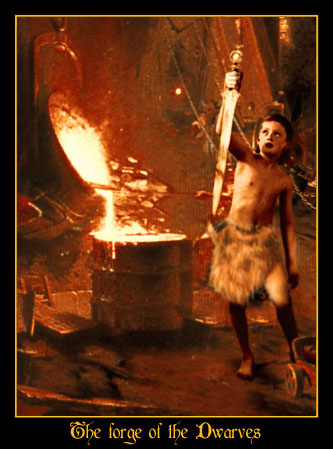
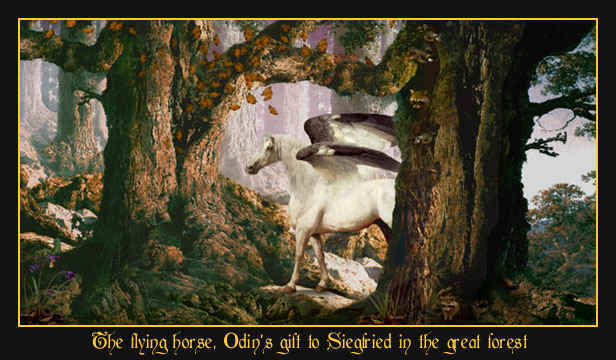
Young Sigfried was raised by Mime, a Nibelung dwarf, who plans to use him to gain the ring for himself. Working at his forge in a cave in the great forest, Mime tries in vain to rejoin the pieces Siegmund's sword hoping Siegfried could kill Fafnir with it. Mime wins a wager with a wanderer, ( Odin in disguise ) and the god tells the dwarf that only a warrior who has never learned fear could re-forge the magic sword. Siegfried manages to forge the pieces of his father's blade together and becomes the mortal favorite of Odin, receiving many blessings such as a Valkyrian flying horse.

_the flying horse.jpg (90303 bytes)

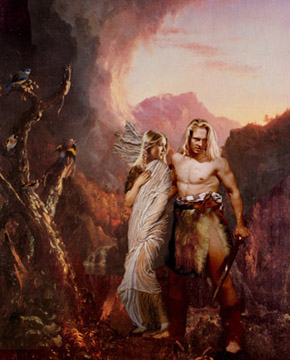
As a young man, he slays the dragon, Fafnir and siezes the ring. A bath in the dragon's blood makes him impervious to injury everywhere save one small spot where a leaf has clung to his back. He accidentally tastes Fafnir's blood which gives him the power to understand the forest birds. He learns of Mime's plan to kill him for the ring, and Siegfried kills him first. In a rocky wilderness, Odin calls Erta up from the Earth. He tells her that, far from fearing the twilight of the gods, he desires it. He allows Siegfried to keep the ring by means of which he and Brünhilde will be able to masterthe world. A bird leads Siegfried to the sleeping Brünhilde. Siegfried plunges through the fire and rouses Brünhilde with a kiss.

_The Dragonslayer copy.jpg (58903 bytes) _Siegfried and Brunhilde.jpg (66821 bytes)

Die Götterdämmerung (Twilight of the gods )

Later, when Brünhilde sends Siegfried on a Rhine journey he meets the sons of Alberich the nibelung, Hagen, Gunther, and Gutrune. He is tricked into drinking a potion by Hagen that destroys his memory and then he is decieved into betraying Brünhilde. He regains his memory and is stabbed in the back by Hagen. Gunther was then killed in a struggle for the ring. When Brünhilde learns that Siegfried had been tricked into betraying her, she takes the ring from his finger and rides up onto his funeral pyre.

In the distance Valhalla burns and the gods are destroyed.

_Myths & Legends of the Ancient Norsemen.gif (3042 bytes)

Other legends of the ancient Teutons...

_Thor & the Fire Trolls.jpg (57101 bytes)

The Mighty Thor, known primarily as the thunder god was also the norse god of war and agriculture. Among the great gods of the Aesir, Mighty Thor was second only to Odin, his father. His mother was Fiörgyn, and Loki, his half-brother, was a frequent companion on his adventures. His name is the teutonic word for thunder, outside the teutonic areas, he has close affinities with Jupiter or Zeus. He was worshipped as Thunor, or Thonar in ancient England. His hammer, also created by the dwarfs, was aptly called Mjölnir (crusher ) was as destructive as the thunderbolts of Zeus in punishing wrongdoers. It was the most potent weapon against the Frost Giants, Fire Trolls and other enemies. When Thor hurled it, it returned to his hand after hitting it's target. When Thor put on his magic belt his already enormous strength was doubled. The creators of these marvels, the Dwarfs were a class of clever supernatural beings not unlike elves and fairies, noted for skill at metalworking and serving the gods. Thor, is for whom Thursday or Thor's day was originally named. He was apparently more widely worshipped more than any other god by the ancient norsemen. The evolution of the popular Thor Mythology continues to this day in comic books, video games, and motion pictures.

Kriemhilde's Revenge - (from earlier versions of The Nibelungenlied )

THE REVENGE OF KRIEMHILDE:

The Lady Kriemhilde (A.K.A. Grimhild, Hild, Brünhild) Her name means ‘armored warrior woman’ and the English word Grim derives from her name too. In her earliest legends she was originally a daemonic mythical figure representing darkness and death.

Like the legendary King Arthur, she was also a historical figure, wife of Attila the Hun and sister of Gunther. (453 A.D.) She marries Attila in one reliable historical account and kills him in revenge for the death of her former husband on their wedding night.

I have illustrated her here in the 13th century Middle High German mythic version preparing to confront her cowardly brothers with her dead husband’s shield and sword, demanding action! Siegfried was the Nordic people’s greatest hero and chief dragonslayer his story is similar to The Iliad and the Odessey of the Greeks. In another version she demands revenge for her murdered father. She is depicted here as the heroine of the The Nibelungenlied, greatest epic of Teutonic Mythology.

The lady Kriemhilde.jpg (68344 bytes)

"Lo there, do I see my father- Lo there do I see my mother and my sister and my brothers - Lo there I do see the line of my people back to the beginning - Lo they do call to me - they bid me to take my place among them - in the hallowed halls of Valhalla - where the brave shall live forever!" ~ Viking liturgy

_Myths & Legends of the Ancient world-.gif (15805 bytes)

Thank You For Visiting the Norse Myths and Legends Art Page of Howard David Johnson...

All images copyright 1993-2006 Howard David Johnson all rights reserved. Gorgeous Poster size Reprints Are Available Below...

*****

ON SALE NOW from BRANDYWINE PRESS!

These beautifully printed 11" x 8.5" 64 page trade paperbacks feature 48 full page interior plates in full color for only $24.99 USD. Less than the price of a single poster! Featuring incredibly Realistic Mythological and Fairy Art created in a style inspired by Classic Illustrators by American Artist & Photographer Howard David Johnson.

Click on the covers to order the books from Lulu.com

ALSO: Click on the CREDIT CARD logo below to

VISIT POD PUBLISHING FOR BEAUTIFUL POSTER SIZE REPRINTS

AND A VARIETY OF PAYMENT OPTIONS, SIZES, PAPERS, AND PRICES

Admission Free Fantastic & Realistic Art Galleries

Deutsch Francais Italiano De Portugese Espanol Dutch Japanese Chinese

The Realistic Drawings, Paintings & Digital Art of American Artist & Photographer Howard David Johnson.

Click on the Icons to visit the Educational Galleries of Realistic Art: Including Mythology of Greece, Rome, Asia, The Celts, The Norsemen, and more...Fairy and Dragon legends, The King Arthur Legends, The Seven Wonders of the Ancient World, Paintings of Ancient Egypt and Babylon, Ancient Mystic Religious texts, War & Civilization from The Ancient Spartans and the Trojan Horse to World War Two, The World's Great Religions, and Art Technique...

( These are best viewed in full screen mode. Simply click F11 on your keyboard )

Enter a world of imagination...

home page btn.02.jpg (13926 bytes)

Asian mythology Art Gallery.jpg (13921 bytes) _Btn.myth.jpg (4278 bytes)

btn celtic&.jpg (15723 bytes)

Realistic Paintings Art Gallery.jpg (14400 bytes)

~symbolist art.jpg (15008 bytes)

Home Page

Asian Mythology

Greek Mythology

Celtic Mythology

Mythic Women

Symbolist Art


~The great Pyramids copy.jpg (14977 bytes)

order repro.jpg (16120 bytes)

btn res publica.jpg (16510 bytes) The world'd great religions.jpg (12695 bytes)

The World's Great Religions Art Gallery.jpg (14460 bytes)

Alamo btn.jpg (17997 bytes)

Res Publica

Reprints for Sale

The Seven Wonders

World Religions

Realistic Paintings

Legends of History


btn.com.2.jpg (15461 bytes)

btn stages.jpg (16477 bytes) btn celtic fairies.jpg (18389 bytes)

History of Dragons..jpg (17045 bytes)

fantasy2link.jpg (14608 bytes) btn.Phantom of the Opera.jpg (16977 bytes)

Commercial Art

Style & Technique Fairy Paintings

History of Dragons

Fantasy Art I Fantasy Art II

btn.fine art 2.jpg (14122 bytes)

btn photos.jpg (11360 bytes) ~btn.pencil drawings.jpg (11394 bytes) Colored pencil portraits Art Gallery II.jpg (12252 bytes) Realistic Art Instruction link.jpg (18214 bytes) _Btn.abouthdj.jpg (3569 bytes)

Art Numérique

Studio Headshots Pencil Portraits I Pencil Portraits II

Art Instruction

About the artist

a 21st century realistic artist.GIF (8255 bytes)

Howard David Johnson is a contemporary visual artist and photographer with a background in the natural sciences and history. He works in a wide variety of media ranging from traditional oils, pastels and others to cutting edge digital media. After a lifetime of drawing and painting, Howard David Johnson's Traditional Realistic Art was exhibited in the British Museum in London in 1996, ( 3 years before he got his first computer ) as well as numerous American ones since, such as the Metropolitan Museum of Art. His illustrations have appeared in every major bookstore and gameshop chain in America as well as magazines and educational texts around the world. Some of his more prestigious clients have included the University of Texas, the Book of the Month Club, Paramount Studios, PBS TV, Adobe Photoshop Auto FX, and J Walter Thompson Advertising. Licenses to print his existing work are available at surprisingly affordable prices. Oil Paintings, Colored pencils, Pastels, Mixed media, and Digital art can also be commissioned for select projects - Click on commission new art below... Working in a variety of traditional and cutting edge digital media he offers his customers a variety of options and more than thirty years of experience. As a commercial illustrator HDJ has not only used the computer but has been involved in the development of imaging software. He delivers the rights to these custom made copyright free illustrations and old fashioned customer service when he does work-for-hire. On his existing works license offers start as low as $100.00

POSTER ART ART BOOKS PUBLISHING LICENSES BUY ORIGINAL ART ART INSTRUCTION

info@howarddavidjohnson.com

Thank you for Visiting... Your business, letters, & links are always welcome.

*****

Gorgeous Professional Quality Collectible Poster Size Fine Art Lithographs and Single Reprints

of H D Johnson's illustrations are available - or

Dealers- Ask about our GREAT bulk order discount pricing!

Bulk Customers- Ask for our credit application

info@howarddavidjohnson.com HIGHEST PROFESSIONAL QUALITY GUARANTEED!

realistic painting # 3.jpg (54556 bytes)

This Art Gallery has been honored by more than 20,000,000 Unique Visitors

from the Four Corners of the Earth:

My Friends from around the world thus far :

Sweden, Finland, Norway, Netherlands, Denmark, Germany, Iceland, England, Scotland, Wales, Ireland, France, Greece, Cyprus, Turkey, Italy, Belgium, Yugoslavia, Macedonia, Croatia, The Czech Republic, Bosnia, Herzegovina, Slovakia, Slovenia, Luxembourg, Latvia, Estonia, Hungary, Bulgaria, Lithuania, Poland, Austria, Romania, Spain, Russia, Ukraine, Moldova, Malta, Switzerland, Portugal, Israel, Egypt, Saudi Arabia, Yemen, The United Arab Emirates, Qatar, Iran, Lebanon, Morocco, The Republic of Congo, The Ivory Coast, Angola, Zambia, Zimbabwe, Nigeria, Namibia, South Africa, Mauritius, Japan, South Korea, China, Macau, Taiwan, Nuie, New Zealand, Australia, The Philippines, Palau, Cocos Island, The Kingdom of Tonga, Singapore, Thailand, Brunei Darussalem, Malaysia, India, Sri Lanka, Pakistan, Indonesia, Chile, Argentina, Uruguay, Brazil, Peru, Venezuela, The Dominican Republic, Guatemala, Costa Rica, Colombia, Trinidad and Tobago, Panama, Ecuador, Belize, Puerto Rico, Mexico, Canada, and my home,

The United States of America ...

If your home is not listed here please e-mail us and tell us where you're from..

POSTER ART ART BOOKS PUBLISHING LICENSES BUY ORIGINAL ART ART INSTRUCTION

info@howarddavidjohnson.com

Your business, letters, & links are always welcome

Thank You For Visiting the Norse Myths and Legends Art Page of Howard David Johnson...

All images copyright 1993-2008 Howard David Johnson all rights reserved.

*****

ABOUT THE ARTIST

"Those who are enamoured of practice without science are like a pilot who goes into a ship without rudder or compass and never has any certainty where he is going. Practice should always be based upon a sound knowledge of theory, of which perspective is the guide and gateway, and without it nothing can be done well in any kind of painting."

Howard David Johnson is a contemporary visual artist and photographer with a background in
the natural sciences and history. He works in a wide variety of media ranging from traditional
oils, pastels and others to cutting edge digital media. He loves mixing media. This site features
examples of his Realistic Art, including illustration, photography, experimentalism, and fine art.

The various galleries linked to by the icons above show many examples of His Realistic Art, and are grouped by theme rather than media. There are also sample illustrations from his upcoming books on Celtic Myth and Legend and World Myth & Legend. Since boyhood he has passionately copied the old masters. To create his work, he usually starts with a thematic concept followed by a rough realistic pencil sketch, then followed by his photography, often traveling to find suitable scenes and locations and then working in his Photography studio with live models from his sketches. He then assembles a variety of elements which are realistic and original. As a boy he dedicated his life to art in 1960. From 1965- 1999 he used xeroxes and tracings to make his preliminary photo montages. This is patterned after the manner used by Maxfield Parrish and other 19th century notables. Beginning with a tracing, he then draws or paints from these complex original Computer Photo Montages. Many of these are on display on this web and slated for future completion in a variety of realistic traditional art media. As this happens, the finished work is substituted in the exhibit. Recently he shot hundreds of aerial photos of clouds at marvelous angles and perspectives and also looking down on the mighty mountains, rivers, and deserts of the American west while flying from Texas to Oregon and back for dynamic source material for realistic flying scenes in upcoming paintings , drawings, and pictures.

His favourite medium for realistic art is colored pencil because of the high speed and low expense, and people began expressing difficulty in telling his colored pencil drawing from photographs in the early 1980's. In the last 35 plus years he has also mastered Oils, Pastels, Acrylics, Watercolors, Inks, Scratchboard, Gouache, Photography, and the highly controversial digital media ( Art Numérica ) . As a commercial illustrator Johnson has not only used the computer to create art but has been involved in the development of computer imaging software. Working in a realistic style inspired by classic illustrators HDJ is deeply rooted and grounded in the Greco-Roman artistic tradition, Feeling that with realistic art, the human form is the ultimate arena for artistic expression. His lifelong dream came true when his Traditional Realistic Art was exhibited in the British Museum in London England in 1996. His mixed media has also been displayed in numerous other ones since such as the Metropolitan Museum of Art. Having achieved international acclaim as a traditional visual artist he discovered digital media ( Art Numérica ) in 1999. Because of his passion for realistic art and photography he elected to embrace it and joyfully be a part of this historic era in the visual arts as a 21st century realistic visual artist. `fig.0003-3a.jpg (47139 bytes)

Since 1972 when he began his career as a scientific illustrator for the University of Texas he has earned his living illustrating all kinds of books, magazines, CD covers, and all sorts of games, greeting cards, calendars, portraits, murals and the like with his contemporary realistic art... HDJ's Realistic Art has appeared in every major bookstore chain and fantasy gaming shop in The United States and has been used in educational texts and magazines all over the world. This site features realistic paintings & pictures for the twenty-first Century including some oil paintings, as well as lots of other exciting media such as colored pencil drawings, pastel paintings, acrylic paintings, gouache paintings, watercolor paintings, and pencil drawings, and also featuring studio, field, & aerial photography, digital painting and photo-montage and all these media mixed in an assortment of experimental combinations...Working in a wide variety of media to create his realistic art he offers his customers a host of payment and product options. He delivers the rights to these custom made copyright free illustrations and old fashioned customer service when he does work-for-hire. He loves to paint custom oil paintings and accepts commissions with down payments starting at one thousand dollars. On his existing works his low cost license offers start at only 100 dollars.

*****

All paintings, pictures, & text (c) 2004-8 Howard David Johnson All rights reserved

Thank You for Visiting the Nordic Mythology Art Gallery of Howard David Johnson...

*****


Bonus Section:

Personal Opinion Essays on Realistic Art yesterday and today by the artist.

In addition to his mastery of traditional media, Howard David Johnson now combines drawing, painting, photography, and digital media with more than thirty years of experience in these fields to create his Realistic Art Numérica in 21st century paintings and pictures.

Did you know the Greek word "Photography" means "Painting with Light"? Today with the advent of computers it truly lives up to it's name. Due to developments in Art and Technology, a broader definition of painting is needed than that which is found in common usage.

Announcing Art Numérica -an exciting merger of traditional visual art and cutting edge technology... a new art form for the twenty- first century... Art Numérica is not limited to realistic art but also offers limitless horizons for everything from cartoons to absttactions.

It is the most dramatic development in the visual arts since the Renaissance. In the words of Al Jolson in the movie world's first talking picture" You ain't seen nothin' yet!"

"THE MORE THINGS CHANGE, THE MORE THEY STAY THE SAME..."

(A Brief essay dealing with attitudes toward Traditional Realistic Paintings, Pastels, Colored Pencils and Art Numérique )

"Painting, in art, the action of laying colour on a surface, or the representation of objects by this means. Considered one of the fine arts"

~Encyclopaedia Britannica.

"Painting. noun. 1.) The act or employment of laying on colors or paints. 2.) The art of forming figures or objects in colors on canvas or any other surface, or the art of representing to the eye by means of figures and colors any object; the work of an illustrator or painter. 3.) A picture; a likeness or resemblance in shape or colors. 4.) Colors laid on. 5.) Delineation that raises a vivid image in the mind; as in word painting.

~ Webster's Unabridged Dictionary of the English Language
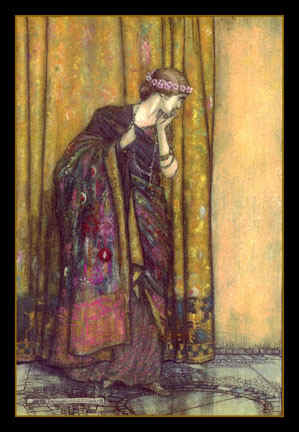
~Dierdre of the Sorrows copy.jpg (49196 bytes)

Pastel, Acrylics, and Colored Pencils combined

Snobbism in the arts is nothing new. Some people will tell you that oils are the only valid medium for realistic paintings. That Colored Pencil, Digital, and other Realistic Painting and Drawing Media are not valid for "real" art. Young artists, Don't let them bother you. Their forerunners used to condemn Pastels before they gained acceptance and called them "crayons" when Johann Alexander Thiele (1685-1752) invented them. Mercilessly disrespectful art critics of the time could not stop the Experimentalists no matter how viciously they attacked and derided them. "Crayon-painting" as it was called in England was practiced early on by persecuted pioneers in Switzerland and many other nations. What a debt we owe to these master artists who refused to knuckle under to the pressure of those short-sighted critics during those historic and experimental times. It took until 1870 with the founding of the "Societe` Des Pastellistes" in France that respect came at last to these heroic & immortal visual artists.

In England the liberation of the Pastellists from slight regard and undeserved disrespect came with the first exhibition of "The Pastel Society" at the Grosvenor Gallery in 1880. Pastel Painters like Mary Cassat and others from America and other nations forever silenced the snobs with their masterworks and gained recognition at long last for Thiele's invention as a valid art medium. I am persuaded that history will repeat itself. Like Pastels, I believe these wonderful new colored pencils and even Digital Realistic Art Media will one day receive the recognition they deserve as powerful mediums of artistic expression just as pastel paintings did. What is your definition of art? Have you thought about it?

Mine is: "anything that makes you feel or think."

Consider dancing... it can be a little skip in the step or rise to the level of the incomparable Russian Ballet. Did you know that just the materials alone for a single oil painting cost up to a thousand dollars these days? Even paying the artist less than minimum wage no one but the super rich can afford them anymore. Something's got to give. Realistic paintings in oil have been highly prized for centuries and the appeal and following of realistic art is undiminished to this day. Oil paintings featuring Abstract Art and Realistic Art are generally the most treasured form of all the visual art media and with good reason. But snobbish art critics favoring abstract art have declared that realistic paintings, or illustrations are not art for a century. With so many representationalist paintings by so many immortal master artists hanging in the Louvre, the Hermitage, and the British Museum and others I think the disrespect for realistic illustrators that dominated the 20th century is academically ridiculous as well as vain and intolerant, insisting theirs is the only valid opinion. What is your definition of Art? I believe almost any form of human expression can be raised to the level of "high art" especially visual art and Realistic illustration...

~Dierdre of the Sorrows detail.jpg (59016 bytes)

The detail reveals Realistic art and abstract art combined

By my own definition of art, which is: "anything that makes you feel or think" most abstract paintings are not "real art" to me personally, because abstract paintings usually neither make me feel or think, usually focusing obsessively on technique and avoiding any coherent content. I usually draw a complete blank mentally and emotionally when I look at them. In 1979 the Houston Metropolitan Museum of Art displayed a triptych of 3 giant paintings they paid fifty thousand dollars for- three blank white canvasses entitled "untitled". Then there was "The incredible new artistic Genius" with an I.Q. of 62 ...Congo the chimpanzee with his gala New York art exhibition...an elaborate prank played on the Snobbish American Art critics about a generation ago by research scientists in the field of primatology. Imagine how upset they were when he created one of his "ingenious masterpieces" right before their eyes.

( My Source for this is the Time Life Science Library volume entitled "The Primates". )

Art education has been almost completely removed from American Schools as a result of generations of this kind of fabulous nonsense contributing to America's cultural illiteracy crisis. Now, the works of Leonardo Da Vinci, Michaelangelo, and other notables are being removed from school libraries. After generations of this, most American college graduates today cannot name even one living visual artist, abstract or realistic.

There is no way that mandating more math, requiring more reading, or scheduling more science will replace what we have lost as a culture.

What is your definition of Art?

~HDJ

*****

Note: Abstract Paintings by Congo the Chimpanzee outsold Warhol and Renoir by over 25,000 dollars in June 2005 at a London art auction. Born in 1954, Congo created more than 400 drawings and paintings between the ages of two and four. He died in 1964 of tuberculosis. There is no precedent for this kind of sale.

The Rebirth of Realism

More thoughts on realistic art yesterday and today by the artist

Art History has entered a new era with the birth of Art Numérica, or digital art media in the 21st century. Artists never stop exploring with mediums. Artists have been developing techniques, experimenting with different tools since at least twenty- five thousand years ago, when the first artist picked up a charred stick and scratched a picture out on the wall of his cave. You'd think everything would have been tried by now, but it hasn't. Exploring new mediums this very day is just as exciting, just as full of freshness and newness as it ever was.
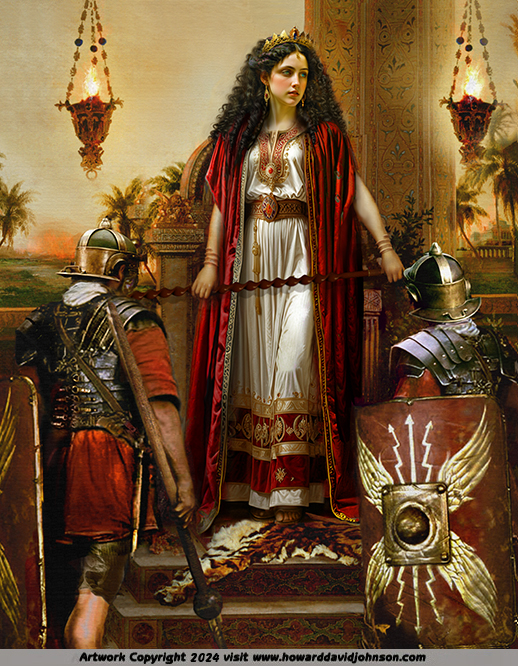
Photography, Drawing, Painting and Art Numérica combined

The creation of Realistic art has been the goal of most artists since the dawn of civilization. Realistic art was the pride of ancient Greece. The world's greatest museums are full of realistic art. Realistic art WAS art until the advent of the abstract expressionist movement in the twentieth century. The coming of the camera in the nineteenth century changed realistic art forever. Suddenly, realistic art was not the only way to create realism in portraits and historical records. The work of the realistic artist was suddenly made into an expensive luxury. The political power of the realistic artist was broken and they were no longer an indispensable member of society. Hostility to the creators of realistic art goes back to ancient times and the jealousy of advisers to the Pharaohs and others who were not able to spend as much time with their rulers as their portraitists. Although with the aid of photographs, realistic art achieved levels of excellence undreamed of, the realistic art movement of the late nineteenth century was short.
None of these people earning their living creating realistic art could compete with the speed and low cost of photographic portraiture. Determined to survive, great realistic artists like Pablo Picasso ingeniously turned inward and began to explore things that could not be photographed in a new school of art, abstract expressionism. The day of the fine art superstars had arrived. It was now largely just a hobby to abstract and realistic artists alike. Illustration, because of advances in printing technology enabled an elite few to earn a living with their realistic art. These illustrators working in realistic art media were condemned and ridiculed in much the same way Europe's great symphonic composers were condemned for working in motion pictures after fleeing the nazis during World War Two. The rift between realistic and abstract art grew wider and wider. The universities and key media usually sided with the abstract camp and derided anyone working in any realistic art media declaring boldly that realistic art was not "real" art. Immortal giants of realistic art such as Maxfield Parrish were mistreated their entire lives. They were accused of selling out for creating beautiful pieces of realistic fine art to earn a living. The attitude that the true artist must suffer and starve and die in poverty became a rule. There were the Abstract art superstars, the professional realistic illustrators, and the hobbyists who, although cut off from gainful employment and social influence still recognized their artistic gifts as a calling rather than a profession.

Early abstract art masters proved themselves as realistic artists before delving into realms of the intangible. They had to do this at that time to prove themselves because of the challenges they faced from the establishment for going against the status quo. In the latter part of the 20th century, realistic artists like HDJ were challenged to do abstract art to prove themselves as shown in the example above (Deirdre of the sorrows). Later realistic art training was abandoned in most schools and things like splattering paint in fits of rage were deemed more than enough. By the end of the 20th century something as destructive and ridiculous as nailing a pack of cigarettes to a shoe was considered fine art but not realistic paintings. Fashions in art have often been as silly as fashions in ladies hats. As the century drew to a close, many people had had enough. The realistic revolt was at hand. The rebirth of realism was fueled by the advent of the digital era. Now, for the first time in almost two centuries, an artist or illustrator could earn a decent living again with his realistic art. This is historic. Realistic art is not going to go away, especially now that photography has truly merged with traditional realistic visual art. Photography comes from the Greek words meaning "painting with light". Now with the advent of digital media the capability of realistic art has become almost limitless, truly, "painting with light". The merger of all the world's art forms to realize the potential of motion pictures has come now to still realistic art media. This website for example, combines music, prose, poetry, photography and traditional realistic art media to create an experience beyond merely looking at realistic paintings.

The twenty- first century is already seeing a new renaissance in the arts because of the world wide web. There has never been anything like it. Abstract art, computer art, photographic art, and realistic art are continuing to be separate schools of art but are also blending to create exciting new horizons. Although Digital art does offer completely new horizons to the artist in the 21st century it does not mean the end of our time honored art traditions. Instead, it offers additional ways to keep these traditions and schools of thought fresh and alive. ~ HDJ

*****

Thank You For Visiting the Norse Myths and Legends Art page of Howard David Johnson...

All images and text copyright 2008 Howard David Johnson . All rights reserved.

*****