domingo, 21 de febrero de 2010

11 - watchers and could I be a decendant of them

Fuente:

http://www.disclose.tv/forum/watchers-and-could-i-be-a-decendant-of-them-t12205-100.html

Información:

Post subject: Re: watchers and could I be a decendant of them
PostPosted: Wed Dec 02, 2009 7:01 pm
Offline
Initiate
Initiate
User avatar

Joined: Thu Jun 25, 2009 6:40 pm
Posts: 372
http://www.iras.ucalgary.ca/~volk/sylvia/Kurgans.htm
Quote:
KURGAN CULTURE
The Kurgan people were an Indo-European culture existing during the fifth, fourth, and third millennia BC; they lived in northern Europe, from Russia across Germany, and various authorities have mounted a case for them being THE proto-Indo-European culture, from which all Indo-European cultures descend. Other researchers think it likely that later-day Kurgans were the "Sea People" who laid waste to the Holy Land around 1200 BC - traveling south along the Mediterranean in ships, with their women following them in wagons along the shore. The word kurgan means barrow or grave in Slavic and Turkic; Kurgan culture is characterized by pit-graves or barrows, a particular method of burial. They are also called the Pit-grave people, or Barrow people.

The earliest Kurgan sites are in the Ukraine and southern Russia, from which they spread by about 2000 BC to Europe, crossing the Dnieper River. Wherever Kurgan culture spread, it was marked by common elements unlike those of the surrounding Bronze-Age cultures. These are the characteristics of the Kurgan people:

They practiced animal husbandry; in rubbish dumps at Kurgan hill-forts and villages are found the bones of lots and lots of horses, many cattle, and a few pigs, sheep and goats. Few bones of wild game (such as deer) were found, so Kurgans were not a hunting culture. Horse-heads carved in diorite were found, with harness-marks cut into them to indicate bridles.

Kurgan horse-herders may have been like the Scythians, who rode geldings only, their main herds being kept wild under stallions, and controlled through the mares which were hobbled near the settlements and milked regularly. Both wild-horse bones and bones of domesticated horses were found in Kurgan sites; modern bone-analysis specialists can apparently tell the difference between the two types.

Kurgan people typically lived on flat steppe grasslands, near wooded areas and watercourses. There were mixed forests of oak, birch, fir, beech, elder, elm, ash, aspen, apple, cherry and willow. There were aurochs, elk, boar, wild horses, wolves, fox, beaver, squirrels, badgers, hare and roe deer. Their ornaments were made from elk antlers, cattle and sheep bones, and boar tusks; one of the most common implements found at their settlements was a hammer-hoe made from elk antler. They had bone awls, chisels, and polishers, and wooden bows with flint-tipped arrows which were carried in skin quivers, Scythian-style. They fished: in their villages were bone harpoons, points, fishhooks, and also fish bones. They had wool and flax. They didn't raise much grain (that is, they were not heavily into farming) - only a few sickles were found in their villages, though archeologists found grindstones, pestles, and saddle-querns; also found was millet grain and melon seeds. One object which may have been a ploughshare was discovered. Beneath one Kurgan barrow-mound, a stretch of ground protected by the mound itself showed unmistakable plough-furrows.

They did use two- and four-wheeled wagons with big wheels of solid wood, unspoked. Examples of these have been found, along with of clay images: toy wagons, buried with royalty (maybe?). Also found were copper figurines of yoked oxen in pairs, so oxen probably drew these solid-wheel carts - which were of about the same proportions, wheel to cartbed, as a child's toy cart with a low rim around it.

Metal objects, early Kurgan period: copper awls plus tanged, leaf-shaped copper knives or small daggers. Late Kurgan period: daggers, awls, flat shaft-hole axes. The Kurgan people of the northwest Caucasus mountain region (a center for metallurgy from way WAY back) at about 3500 BC and afterward possessed gold and silver vases, beads, and rings; also bull, goat and lion figurines; also copper axes, adzes, daggers and knives. No bronze objects were found; this means they either had no knowledge of alloying, or no access to tin. The last is unlikely; tin was available to the Persians and Greeks in later days, though the sites of the ancient tin mines are not now known; the major known site was in England, of course. The Kurgans would have panned their gold from rivers in the Caucasus mountains: gold, copper and silver can be found raw in their pure form, ready for use.

The lion figurines at first sound odd; there are certainly no lions in Europe or Asia today. But the Greeks also left artwork depicting lions, and wrote of wild lions in the mountains of Macedonia and Asia Minor, which came down into settled lands and preyed upon livestock. So the Kurgan artisans in the Caucasus mountains, north of Asia Minor, were probably also familiar with lions. Equally, there were wild bison in Latvia and Russia right up to modern times.

A note: the early Russian naturalist P. S. Pallas ("The Southern Provinces of the Russian Empire", originally published 1812) remarks that in the steppes of the lower Volga lived a giant land reptile called the Coluber Jaculator lizard, which the Russians named the courageous Sheltopufik; he wrote that it "is not venomous, is often six feet long; it moves about with erect head and breast, and when pursued defends itself by darting against the horse and his rider. There are likewise two other species of reptiles, the Berus, and the Halys, both of a poisonous nature." Large lizards like those of the species mentioned by Pallas inhabited the fringe lands of Asia from the Russian steppe all the way to the Persian Gulf. It is probably not a coincidence that the earliest dragon legends come from the same place!

Kurgan pottery: this was very primitive, made from clay mixed with crushed shells and sand. The pots were decorated with incision-marks made by a triangular stick, with pit impressing (?), cord impressing and impressing with a stick wound with cords.


Top
Profile
Post subject: Re: watchers and could I be a decendant of them
PostPosted: Wed Dec 02, 2009 7:27 pm
Offline
Initiate
Initiate
User avatar

Joined: Thu Jun 25, 2009 6:40 pm
Posts: 372
Did Ancient Biotechnology Create "Nephilim"?
by Thomas R. Horn
May 23, 2007, NewsWithViews.com
Quote:
The Apocryphal books of Enoch, 2 Esdras, Genesis Aprocryphon and Jasher support the Genesis story, adding that the sin of the angels grew to include genetic modification of animals as well as humans.
The Book of Jasher, mentioned in the Bible in Joshua 10:13 and 2 Samuel 1:18, says, "After the fallen angels went into the daughters of men, the sons of men taught the mixture of animals of one species with the other, in order to provoke the Lord"(4:18).
This clear reference to the Genesis 6 record illustrates that "animals" were included in whatever cross-species experiments were being conducted, and that this activity resulted in judgment from God.
The Book of Enoch also supports this record, saying that after the fallen angels merged their DNA with women, they "began to sin against birds, and beasts, and reptiles, and fish" (7:5,6). The Old Testament contains associated reference to genetic mutations, which developed among humans following this activity, including unusual size, physical strength, six fingers, six toes, animal appetite for blood and even lion-like features among men (2 Sam 21:20; 23:20).


Top
Profile
Post subject: Re: watchers and could I be a decendant of them
PostPosted: Wed Dec 02, 2009 7:57 pm
Offline
Initiate
Initiate
User avatar

Joined: Thu Jun 25, 2009 6:40 pm
Posts: 372
http://www.andrewcollins.com/page/news/News_vi_EQ12%20_1_May2009.htm
EarthQuest News, Andrew Collins Newsletter Vol. 12 No. 1 (May 2009)
Quote:
vi. The Genesis Secret
Image
One book that you might just notice in the top 20 bestseller section of W H Smith (or Barnes and Noble if you are in the USA) is The Genesis Secret by Thomas Knox (HarperCollins, 2009, and see also the website at http://thegenesissecret.com). It is a novel centred around the discovery in southeast Turkey of the pre-Neolithic megalithic complex of Gobeli Tepe, constructed c. 10,000 BC.

Thomas Knox is the nom-de-plume of British journalist Sean Thomas, who first contacted me back in 2007. He had become interested in Gobekli Tepe, which I have written about extensively since going there in 2004. He wanted to visit the megalithic complex, and so Sue and I gave him instructions on how to get there. A few months later his article on the subject appeared in newspapers worldwide. It highlighted the fact that Dr Klaus Schmidt, the German archaeologist in charge of excavations at the site, had unofficially admitted that the region was most probably the Garden of Eden. This, of course, was the conclusion I had made in my book From the Ashes of Angels, published in 1996, which provides ample evidence that Eden was located where the headwaters of the Tigris and Euphrates rivers arose, close to Lake Van in southeast Turkey (a new theory at this time).

My book appeared four years before the first announcements regarding the discovery of Gobekli Tepe, which is still being uncovered now. What I stated also was that the heretical Jewish work known as the book of Enoch, alluded to Eden, known also as "Paradise" and "Heaven", as being the home of the Watchers, a race of mythical beings often identified as human-like angels.
Image
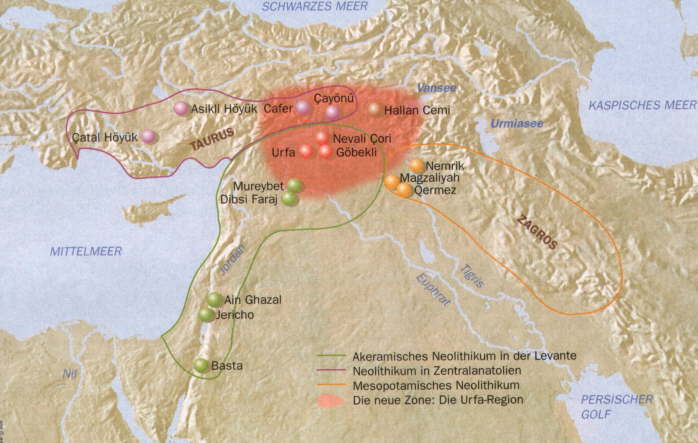
Map of the Near East showing Gobekli Tepe,
which is near the ancient city of Urfa in southeast Turkey

They are credited with having revealed the forbidden arts and sciences of Heaven to mortal kind, causing mankind's fall from divine grace, and his expulsion from the Garden of Eden.

The Story of the Watchers
In both the book of Genesis (chapter six) and the book of Enoch, the rebel Watchers are said also to have come upon the Daughters of Men, i.e. mortal women, who gave birth to giant offspring called Nephilim. For this transgression against the laws of Heaven, the renegades were incarcerated and punished by those Watchers who had remained loyal to Heaven. The rebel Watchers' offspring, the Nephilim (a word meaning "those who fell), were either killed outright, or were afterwards destroyed in the flood of Noah. Some, however, the book of Numbers tells us, survived and went on to become the ancestors of giant races, such as the Anakim and Rapheim.

I wrote that the story of the Watchers is in fact the memory of a priestly or shamanic elite, a group of highly intelligent human individuals, that entered the Upper Euphrates region from another part of the ancient world sometime around the end of the last Ice Age, c. 11,000-10,000 BC. On their arrival in what became known as the land or kingdom of Eden (a term actually used in the Old Testament), they assumed control of the gradually emerging agrarian communities, who were tutored in a semi-rural life style centred around agriculture, metal working and the rearing of animal live stock. More disconcertingly, these people were made to venerate their superiors, i.e. the Watchers, as living gods, or immortals.

The precise same region of the Near East, now thought to be the biblical Garden of Eden, has long been held to be the cradle of civilization. Here a number of "firsts" occurred at the beginning of the Neolithic revolution, which began c. 10,000-9000 BC. It was in southeast Turkey, northern Syria and northern Iraq, for example, that the first domestication of wild grasses took place, the first fired pottery and baked statues were produced, the first copper and lead were smelted, the first stone buildings and standing stones were erected, the first beautification of the eyes took place among woman, the first drilled beads in ultra hard stone were produced, the first alcohol was brewed and distilled, etc., etc. In fact, many of the arts and sciences of Heaven that the Watchers are said to have revealed to mortal kind were all reported first in this region of the globe, known to archaeologists as Upper Mesopotamia, and to the people of the region as Kurdistan.

Sean Thomas acknowledges my help at the beginning of the The Genesis Secret, which follows exactly the same themes as From the Ashes of Angels (and my later book Gods of Eden, published in 1998), including the fact that the Watchers and founders of Eden were bird man, i.e. shamans that wore cloaks of feathers, and that local angel worshipping cults in Kurdistan, such as the Yezidi, Yaresan and Alevi, preserve some semblance of knowledge regarding the former existence of the Watchers or angels as the bringers of civilization. Their leader, they say was Azazel, known also as Melek Taus (or Melek Tawas), the "Peacock Angel". Azazel is a name given in the book of Enoch for one of the two leaders of the rebel Watchers (the other being Shemyaza).

It is an honour for my work to be acknowledged in this manner by Sean Thomas, especially as The Genesis Secret has become a bestseller (as was From the Ashes of Angels in 1996). I won't spoil the plot, so will not reveal Sean's conclusions, or indeed the climax of the book, although I must warn you that it is extremely gory in places!


A Clue in Albinism
I am sure people will ask me about some of Sean's assumptions in his book regarding the origins of the Watchers. All I can say is that in my opinion accounts of the Watchers from so-called Enochian literature, the earliest forms of which were found among the Dead Sea Scrolls, tend to suggest that at least some of their number bore physical traits resembling those of tall albinos with long, serpentine faces, penetrating eyes, long wiry, white hair and skin as white as snow but also as red as a rose. It is even suggested that the Watchers might have used oils in order to protect their sensitive skin from the affects of direct sunlight, another common trait of albinos.
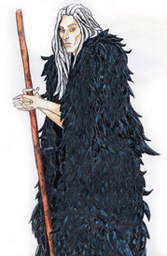
In medical science albinism is the result of a recessive gene that effects only one in every two or more generations of offspring. In other words, if the gene exists in previous generations of a family line then a couple with no albino traits themselves can produce offspring with albino traits. Such recessive genes cannot, in theory, produce whole families of albinos, even though extremely fair features in Caucasians can be classed as a form of mild albinism, and these traits can be passed on from one generation to the next.

This said, if in the past, albinism was seen as a special or mystical trait in humans, whereby (as was the case in parts of Africa in the past) albino children were set aside at birth, removed from their parents and trained as priests or shamans, then it is possible that elite groups of shamans could have contained a high proportion of individuals with such striking characteristics. Today, in various African cultures albinos are still seen as having magical powers, a belief that has degenerated in some regions into a macabre trade in albino body parts, which are used in spell potions by witch doctors, since they are believed to bring about good luck. In Tanzania in particular, albinos live in fear of being abducted, maimed and killed in this sick trade, something that has only recently been exposed by the international news media.

It is possible that groups of shamans, including individuals with distinctive albino features, were forced to migrate from one part of the ancient world to another at the end of the last Ice Age due, perhaps, to severe climatic upheavals (caused perhaps by a comet fragmentation, c. 11,000-10,000 BC, a matter I discuss in two books Gateway to Atlantis, 2000, and the new book Beneath the Pyramids). If so, then their entry into a foreign territory, such as Upper Mesopotamia, where the Palaeolithic hunter gatherers might have been, say, shorter with dark features and more rounded heads, could have led to this shamanistic group of individuals commanding instant recognition as social and/or religious leaders with virtual otherworldly qualities. An acceptance of their assigned rank might have been compounded not simply by their strange appearance and apparent difference in height, but also by their existing knowledge of life skills, such as agriculture, metal working and other forms of primitive technology, such as lapidary, ceramics, stone construction, and the manufacture of drugs and alcohol, beer in particular. It is thus possible that the Watchers used this situation to their advantage, perpetuating the belief that they were quite literally divine beings, the same stance adopted by the first Europeans to encounter native peoples of the Americas. In this manner the incoming Watchers, as they became known, were able to more easily control the emerging population of the Near East through fear, respect and total domination. In this manner, the memory of the Watchers has survived in ancient texts, such as the book of Enoch, as the sudden appearance of a race or gods, angels or immortals that came out of nowhere and revealed to mortal kind the forbidden arts and science of Heaven.

It is remotely possible that the Watchers, as flesh and blood individuals with albino traits, represented the last strains of a former branch of humanity, perhaps an offshoot of the Neanderthals or even Homo Heidelbergensis, who were the precursors of Homo sapien sapiens. Yet such an idea must remain speculation until we find anatomical evidence for the former existence of the Watchers, whose descendents, I have long suspected, existed through until the second millennium BC, when the last of their kind died out. This evidence will one day, hopefully, be found, yet until then the origins of the Watchers must remain a mystery.


Watcher Origins on the Nile
So where did the Watchers as the bringers of civilization come from in the first place? I have always maintained that prior to their appearance in Upper Mesopotamia, the original Garden of Eden, sometime around the end of the last Ice Age, the ancestors of the Watchers thrived among the advanced Palaeolithic communities of Upper Egypt. If so, then perhaps they were the social and religious motivators behind Palaeolithic groups such as the Isnan and Qadan, who thrived c. 13,500-10,500 BC, and possessed a superior form of microblade technology, unequalled anywhere else in either Europe or Western Asia. The Isnan and Qadan also lived in organized settlements, unlike anything else existing in the ancient world until the coming of the earliest Pre-Pottery Neolithic communities of Upper Mesopotamia, the builders of Gobekli Tepe, and would seem even to have developed a proto form of agriculture, the first anywhere in the world.

Did the ancestors of the Watchers leave Upper Egypt for new territories at the end of the last Ice Age, c. 10,500 BC, when the advanced life style of the Isnan and Qadan vanishes virtually over night? Was such a move prompted by climatic changes, perhaps instigated by some kind of global cataclysm, such as the aforementioned comet fragmentation, a subject much debated among scientists today?Others have seen fit to explain the sudden appearance of the Watchers as the bringers of civilization in Upper Mesopotamia around the end of the last Ice Age in different ways.

Image
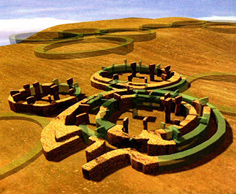
Reconstruction of Gobekli Tepe (Pic credit: DAI/German Archaeological Institute)

For instance, anthropological writer and physician Stephen Oppenheimer in his essential book East in the East (1998) saw the original homeland of the long-faced founders of civilization as the drowned regions of Southeast Asia. Some have seen the Watchers as having come down from the cold wastes of Siberia, where albinism might have thrived in low temperatures, giving rise to legends of the frost giants (or Northmen) of Nefilheim. Still others see the Watchers as having come from outer space, after the sensationalist books of Zecharia Sitchin, a theory that for me simply doesn't make good sense.


The Watchmen of Gobekli Tepe
Image
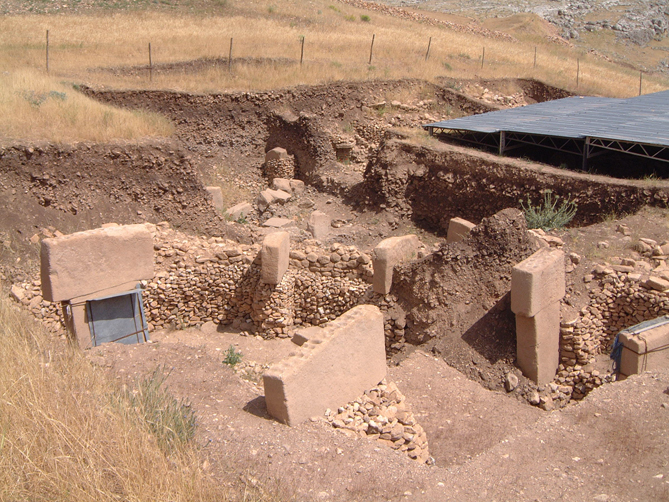
Gobekli Tepe (Pic Credit: Andrew Collins)

That the Watchers might have been behind the creation of Gobekli Tepe, now officially the "oldest temple in the world", and the oldest known megalithic (i.e. great stone) complex anywhere, is almost beyond question, as is their role in the genesis of civilization. As to where their advanced knowledge and wisdom might have come from, the answer is, I suspect, otherworldly journeys using shamanic flight, something clearly indicated by the astral nature of the art found at these proto-Neolithic cult centres, which is predominantly avian in nature.

Yet in addition to reliefs and carvings of birds, including the vulture and ostrich, many other examples of reliefs and sculptures have been found at Gobekli Tepe. These show animals, insects, spiders, reptiles, hybrids and humans, which head excavator Dr. Klaus Schmidt from the DAI (German Archaeological Institute) sees in terms of the "watchman (sic) of the period", a term he uses for those responsible for the construction of these strange, dark monuments of stone. The word "watchman" is so close to "Watcher" that this cannot be coincidence.

That Gobekli Tepe was constructed a full 7,000 years before either the Great Pyramid or Stonehenge is mind numbing in its implications for the history of human capability. More disturbing still is that the descendents of those Watchmen, or Watchers, who built Gobekli Tepe went on to construct further megalithic complexes. As these went on they became cruder and cruder, until the early Neolithic peoples of southeast Turkey were simply erecting uncut standing stones or slabs either in circles or in lines. Much of the finesse of Gobekli Tepe and its contemporaries (Karahan Tepe and Nevali Cori, for instance) was lost, tending to suggest that these people were losing the impetus to create more complex structures. Despite this, we can see here the foundation of the megalithic culture, who then spread, c. 7000-5000 BC, from Upper Mesopotamia carrying with them the technologies and sciences of the Neolithic age, including an understanding of plant domestication in order that the world could settle into a more sedentary life style, away from its previous course of constant hunter-gathering.

Yet it is clear that those who first emerged on the scene in southeast Turkey, c. 10,000 BC, and built Gobekli Tepe, were the ones who possessed the advanced capabilities that kick-started the Neolithic revolution. This is the story told in veiled form within the book of Enoch, unravelled by me in From the Ashes of Angels and Gods of Eden, and novelised in The Genesis Secret by Sean Thomas, writing as Thom Knox. His book is well recommended, although watch the gore, which is quite gruesome in places!


Top
Profile
Post subject: Re: watchers and could I be a decendant of them
PostPosted: Wed Dec 02, 2009 9:04 pm
Offline
Conspirator
Conspirator
User avatar

Joined: Thu Apr 17, 2008 12:04 pm
Posts: 2508
sheeple wrote:


:flop: :flop: 1st nephilim video that hits it on the nail so to speak, maybe now someone will catch onto things i've hinted to since the day i started coming here.


flashback to my first sig


vulcanic aka the highlander!

to bad disclose.tv removed most of my profile.......

_________________
HONORI­FICABILI­TUDINI­TATIBUS
Image
Remiel
VULCANIC PNEUMONO­ULTRA­MICRO­SCOPIC­SILICO­VOLCANO­KONIOSIS


Top
Profile
Post subject: Re: watchers and could I be a decendant of them
PostPosted: Wed Dec 02, 2009 9:09 pm
Offline
Conspirator
Conspirator
User avatar

Joined: Thu Apr 17, 2008 12:04 pm
Posts: 2508
sheeple hats off to you :flop: get feeling you have a very old soul :flop:

_________________
HONORI­FICABILI­TUDINI­TATIBUS
Image
Remiel
VULCANIC PNEUMONO­ULTRA­MICRO­SCOPIC­SILICO­VOLCANO­KONIOSIS


Top
Profile
Post subject: Re: watchers and could I be a decendant of them
PostPosted: Wed Dec 02, 2009 10:09 pm
Offline
Conspirator
Conspirator
User avatar

Joined: Thu Apr 17, 2008 12:04 pm
Posts: 2508
There were giants in the earth in those days.......

There were giants ( in the earth) in those days...........

:think: :headscratch: :sunny: :peep:

_________________
HONORI­FICABILI­TUDINI­TATIBUS
Image
Remiel
VULCANIC PNEUMONO­ULTRA­MICRO­SCOPIC­SILICO­VOLCANO­KONIOSIS


Top
Profile
Post subject: Re: watchers and could I be a decendant of them
PostPosted: Wed Dec 02, 2009 10:29 pm
Offline
Conspirator
Conspirator
User avatar

Joined: Thu Apr 17, 2008 12:04 pm
Posts: 2508
can't forget the giant women of amazons

Amazons - Real Warrior Women or Ancient Myth?


Stories of beautiful and bloodthirsty female warrior women thundering across arid battlefields have been told, re-told and speculated over for thousands of years and by many cultures. Greek myths are filled with tales of the Amazons and their exploits, love affairs and battles with

Olympian gods like Zeus, Ares and Hera. Amazon warriors fought and died in the Trojan war. Homer and Hippocrates speculated over or wrote of these fierce fighting women, as did Greek historian Herodotus. The West African kingdom of Dahomey employed a legion of so-called Amazons who conquered cities for King Agaja during the 1600’s. Spanish adventurer, Francisco de Orellana, is said to have named South America’s greatest river, the Amazon, after a fierce tribe of warrior women he encountered along its banks.


Greek mythology describes the Amazons as descendants of the god of war, Ares, and the sea nymph, Harmonia. They worshipped Artemis, goddess of the hunt and exactly where the Amazons territory was has always been disputed. Herodotus believed they may have occupied the sweeping steppes of Southern Russia. Other stories claim they lived in Thrace or along the lower Caucasus Mountains in northern Albania. The Thermodon River, in Asia Minor, known today as the coast of Turkey, seems to be the most frequently mentioned territory of the Amazons.


Amazon society was stringently matriarchal. Males were of no use other than for mating purposes and as slaves, doing work that was traditionally performed by women. Mens’ outer extremities were often mutilated to prevent them taking up arms against their captors or escaping. Male babies were either given away at birth to neighbouring tribes or killed.


From an early age Amazons were trained in the arts of war. Some myths and stories say that during adolescence a young Amazon’s right breast would be cauterised or entirely removed by her mother so that once the girl reached adulthood she could wield bows and throw javelins more accurately. Experts disagree, claiming that the Amazons would not have had the medical know how to prevent massive haemorrhage or infection if such drastic mutilations actually occurred.


The Amazons were said to be the first humans to tame and ride horses. They were fearless and expert warriors, on horseback or as foot soldiers, and the Greeks fiercest enemies. They dedicated themselves to endless hours of training in the art of combat, their favored weapons, bows, spears and doubled-sided battle axes.


One of the most enduring Greek Amazon myths tells of King Eurytheseus dispatching Hercules to steal Queen Hippolyte’s golden girdle, a gift from Ares. Rather than attacking the army standing outside their city, the Amazons showed curiosity and welcomed them. Hippolyte and Hercules fell in love. Jealous goddess Juno spread lies about the Greeks ulterior motive to kidnap the Amazon queen and hold her for ransom. A bloody battle ensued and there were great losses on both sides, Hercules eventually victorious and returning to Greece with Hippolyte’s girdle.


Yet despite such tales and myths very little concrete archaeological evidence has ever been unearthed to prove that a race of Amazons actually existed. Most stories about them have been dismissed as pure conjecture or wishful thinking, including Herodotus’s writings of Amazons in Russia and their possible connection with the ancient Scythian race. Recent excavations by Russian archaeologists, however, have produced new evidence that suggests Herodotus may have been right.


The Scythians were a race of mounted nomadic warriors whose early origins are still a mystery and who lived in Central Asia around the 7-8th centuries BC. Their generals were said to be more cunning military tacticians than Genghis Khan, who, centuries later conquered half the world. Yet the Scythians were illiterate, they left no language and history, other than their large round burial mounds, or kurgans, plundered ruins that are found all over the Russian steppes. Russian archaeologists have found some kurgans that are still intact, a few of them containing the remains of what they believe were Scythian royalty or aristocrats. These tombs also contained a breathtaking array of golden artefacts: jewellery, chalices, weapons, breastplates and other finely crafted masterpieces depicting Scythian life.


Herodotus wrote of the Scythians as being an extremely barbaric and bloodthirsty race,skinning and beheading slain adversaries and shaping their skulls into drinking cups. Funerals were highly ceremonial and even more blood-drenched. A fallen warrior’s wife and entire household were often killed and placed inside the kurgan to serve in the afterlife. Dozens of the finest horses were sacrificed and staked upright around the outside of the burial mound.


New burial mounds recently opened outside the town of Pokrovka contained the remains of women, some thought to be of great station. They were buried in full battle dress and with a assortment of weapons and other items of war lying beside them. One young woman’s leg bones were signifi

cantly bowed suggesting she spent most of her life on horseback. Another skeleton had an arrowhead lodged in the upper chest, indicating she might have died in battle.


This startling evidence seems to confirm Herodotus’s early theories that certain cultures held women in higher esteem, some even riding alongside men into battle. Other mysterious burial sites have also been recently unearthed in China dating back 2000 years or more, the remains and artefacts suggesting that within other extinct cultures women may have held powerful social and perhaps even military positions as well. Whether any of these long-dead women found in the Pokrovka kurgans or in other recent digs could actually be the mythical Amazons of Greek legend has yet to be confirmed - or may never be proven. For the foreseeable future, research and speculation continues.

_________________
HONORI­FICABILI­TUDINI­TATIBUS
Image
Remiel
VULCANIC PNEUMONO­ULTRA­MICRO­SCOPIC­SILICO­VOLCANO­KONIOSIS


Top
Profile
Post subject: Re: watchers and could I be a decendant of them
PostPosted: Wed Dec 02, 2009 10:31 pm
Offline
Initiate
Initiate

Joined: Wed Jul 30, 2008 12:32 am
Posts: 939
just a question.....if one was to have been born...tall...6 fingers...would that be a sign worthy to explore the thought of ones gene origins pertaining to this study?.....it's all very intriuging.


Top
Profile
Post subject: Re: watchers and could I be a decendant of them
PostPosted: Wed Dec 02, 2009 10:43 pm
Offline
Conspirator
Conspirator
User avatar

Joined: Thu Apr 17, 2008 12:04 pm
Posts: 2508
http://www.mysteriousworld.com/Journal/ ... er/Giants/

_________________
HONORI­FICABILI­TUDINI­TATIBUS
Image
Remiel
VULCANIC PNEUMONO­ULTRA­MICRO­SCOPIC­SILICO­VOLCANO­KONIOSIS


Top
Profile
Post subject: Re: watchers and could I be a decendant of them
PostPosted: Wed Dec 02, 2009 10:49 pm
Offline
Conspirator
Conspirator
User avatar

Joined: Thu Apr 17, 2008 12:04 pm
Posts: 2508
lainn wrote:
just a question.....if one was to have been born...tall...6 fingers...would that be a sign worthy to explore the thought of ones gene origins pertaining to this study?.....it's all very intriuging.


I think it would be no matter what science may say, it couldn't hurt to atleast look and explore the idea.

don't forget double row of teeth too.

great question lainn :flop:

_________________
HONORI­FICABILI­TUDINI­TATIBUS
Image
Remiel
VULCANIC PNEUMONO­ULTRA­MICRO­SCOPIC­SILICO­VOLCANO­KONIOSIS

ENOCHIAN STUDIES (STORY OF THE ANGELS)

Fuente:

http://www.paganspace.net/group/enochianstudiesstoryoftheangels

Información:

ENOCHIAN STUDIES (STORY OF THE ANGELS)

Information

ENOCHIAN STUDIES (STORY OF THE ANGELS)

Discussion of the Origins of the Angels and the Watchers from ancient text

Website: http://www.embracinglife.ning.com
Location: probably going to be held on PalTalk.com
Members: 11
Latest Activity: Feb 9

MORE EVIDENCE FOUND REGARDING THE EXISTENCE OF THE WATCHERS...

EARTHQUEST NEWS

Andrew Collins Newsletter Vol. 12 No. 1 (May 2009)


vi. The Genesis Secret


One book that you might just notice in the top 20 bestseller section of W H Smith (or Barnes and Noble if you are in the USA) is The Genesis Secret by Thomas Knox (HarperCollins, 2009, and see also the website at http://thegenesissecret.com). It is a novel centred around the discovery in southeast Turkey of the pre-Neolithic megalithic complex of Gobeli Tepe, constructed c. 10,000 BC.

Thomas Knox is the nom-de-plume of British journalist Sean Thomas, who first contacted me back in 2007. He had become interested in Gobekli Tepe, which I have written about extensively since going there in 2004. He wanted to visit the megalithic complex, and so Sue and I gave him instructions on how to get there. A few months later his article on the subject appeared in newspapers worldwide. It highlighted the fact that Dr Klaus Schmidt, the German archaeologist in charge of excavations at the site, had unofficially admitted that the region was most probably the Garden of Eden. This, of course, was the conclusion I had made in my book From the Ashes of Angels, published in 1996, which provides ample evidence that Eden was located where the headwaters of the Tigris and Euphrates rivers arose, close to Lake Van in southeast Turkey (a new theory at this time).

My book appeared four years before the first announcements regarding the discovery of Gobekli Tepe, which is still being uncovered now. What I stated also was that the heretical Jewish work known as the book of Enoch, alluded to Eden, known also as "Paradise" and "Heaven", as being the home of the Watchers, a race of mythical beings often identified as human-like angels.

They are credited with having revealed the forbidden arts and sciences of Heaven to mortal kind, causing mankind's fall from divine grace, and his expulsion from the Garden of Eden.


The Story of the Watchers

In both the book of Genesis (chapter six) and the book of Enoch, the rebel Watchers are said also to have come upon the Daughters of Men, i.e. mortal women, who gave birth to giant offspring called Nephilim. For this transgression against the laws of Heaven, the renegades were incarcerated and punished by those Watchers who had remained loyal to Heaven. The rebel Watchers' offspring, the Nephilim (a word meaning "those who fell), were either killed outright, or were afterwards destroyed in the flood of Noah. Some, however, the book of Numbers tells us, survived and went on to become the ancestors of giant races, such as the Anakim and Rapheim.

I wrote that the story of the Watchers is in fact the memory of a priestly or shamanic elite, a group of highly intelligent human individuals, that entered the Upper Euphrates region from another part of the ancient world sometime around the end of the last Ice Age, c. 11,000-10,000 BC. On their arrival in what became known as the land or kingdom of Eden (a term actually used in the Old Testament), they assumed control of the gradually emerging agrarian communities, who were tutored in a semi-rural life style centred around agriculture, metal working and the rearing of animal live stock. More disconcertingly, these people were made to venerate their superiors, i.e. the Watchers, as living gods, or immortals.

The precise same region of the Near East, now thought to be the biblical Garden of Eden, has long been held to be the cradle of civilization. Here a number of "firsts" occurred at the beginning of the Neolithic revolution, which began c. 10,000-9000 BC. It was in southeast Turkey, northern Syria and northern Iraq, for example, that the first domestication of wild grasses took place, the first fired pottery and baked statues were produced, the first copper and lead were smelted, the first stone buildings and standing stones were erected, the first beautification of the eyes took place among woman, the first drilled beads in ultra hard stone were produced, the first alcohol was brewed and distilled, etc., etc. In fact, many of the arts and sciences of Heaven that the Watchers are said to have revealed to mortal kind were all reported first in this region of the globe, known to archaeologists as Upper Mesopotamia, and to the people of the region as Kurdistan.

Sean Thomas acknowledges my help at the beginning of the The Genesis Secret, which follows exactly the same themes as From the Ashes of Angels (and my later book Gods of Eden, published in 1998), including the fact that the Watchers and founders of Eden were bird man, i.e. shamans that wore cloaks of feathers, and that local angel worshipping cults in Kurdistan, such as the Yezidi, Yaresan and Alevi, preserve some semblance of knowledge regarding the former existence of the Watchers or angels as the bringers of civilization. Their leader, they say was Azazel, known also as Melek Taus (or Melek Tawas), the "Peacock Angel". Azazel is a name given in the book of Enoch for one of the two leaders of the rebel Watchers (the other being Shemyaza).

It is an honour for my work to be acknowledged in this manner by Sean Thomas, especially as The Genesis Secret has become a bestseller (as was From the Ashes of Angels in 1996). I won't spoil the plot, so will not reveal Sean's conclusions, or indeed the climax of the book, although I must warn you that it is extremely gory in places!


A Clue in Albinism

I am sure people will ask me about some of Sean's assumptions in his book regarding the origins of the Watchers. All I can say is that in my opinion accounts of the Watchers from so-called Enochian literature, the earliest forms of which were found among the Dead Sea Scrolls, tend to suggest that at least some of their number bore physical traits resembling those of tall albinos with long, serpentine faces, penetrating eyes, long wiry, white hair and skin as white as snow but also as red as a rose. It is even suggested that the Watchers might have used oils in order to protect their sensitive skin from the affects of direct sunlight, another common trait of albinos.


A Watcher of Eden
by Billy Walker John
In medical science albinism is the result of a recessive gene that effects only one in every two or more generations of offspring. In other words, if the gene exists in previous generations of a family line then a couple with no albino traits themselves can produce offspring with albino traits. Such recessive genes cannot, in theory, produce whole families of albinos, even though extremely fair features in Caucasians can be classed as a form of mild albinism, and these traits can be passed on from one generation to the next.

This said, if in the past, albinism was seen as a special or mystical trait in humans, whereby (as was the case in parts of Africa in the past) albino children were set aside at birth, removed from their parents and trained as priests or shamans, then it is possible that elite groups of shamans could have contained a high proportion of individuals with such striking characteristics. Today, in various African cultures albinos are still seen as having magical powers, a belief that has degenerated in some regions into a macabre trade in albino body parts, which are used in spell potions by witch doctors, since they are believed to bring about good luck. In Tanzania in particular, albinos live in fear of being abducted, maimed and killed in this sick trade, something that has only recently been exposed by the international news media.

It is possible that groups of shamans, including individuals with distinctive albino features, were forced to migrate from one part of the ancient world to another at the end of the last Ice Age due, perhaps, to severe climatic upheavals (caused perhaps by a comet fragmentation, c. 11,000-10,000 BC, a matter I discuss in two books Gateway to Atlantis, 2000, and the new book Beneath the Pyramids). If so, then their entry into a foreign territory, such as Upper Mesopotamia, where the Palaeolithic hunter gatherers might have been, say, shorter with dark features and more rounded heads, could have led to this shamanistic group of individuals commanding instant recognition as social and/or religious leaders with virtual otherworldly qualities. An acceptance of their assigned rank might have been compounded not simply by their strange appearance and apparent difference in height, but also by their existing knowledge of life skills, such as agriculture, metal working and other forms of primitive technology, such as lapidary, ceramics, stone construction, and the manufacture of drugs and alcohol, beer in particular. It is thus possible that the Watchers used this situation to their advantage, perpetuating the belief that they were quite literally divine beings, the same stance adopted by the first Europeans to encounter native peoples of the Americas. In this manner the incoming Watchers, as they became known, were able to more easily control the emerging population of the Near East through fear, respect and total domination. In this manner, the memory of the Watchers has survived in ancient texts, such as the book of Enoch, as the sudden appearance of a race or gods, angels or immortals that came out of nowhere and revealed to mortal kind the forbidden arts and science of Heaven.

It is remotely possible that the Watchers, as flesh and blood individuals with albino traits, represented the last strains of a former branch of humanity, perhaps an offshoot of the Neanderthals or even Homo Heidelbergensis, who were the precursors of Homo sapien sapiens. Yet such an idea must remain speculation until we find anatomical evidence for the former existence of the Watchers, whose descendents, I have long suspected, existed through until the second millennium BC, when the last of their kind died out. This evidence will one day, hopefully, be found, yet until then the origins of the Watchers must remain a mystery.


Watcher Origins on the Nile

So where did the Watchers as the bringers of civilization come from in the first place? I have always maintained that prior to their appearance in Upper Mesopotamia, the original Garden of Eden, sometime around the end of the last Ice Age, the ancestors of the Watchers thrived among the advanced Palaeolithic communities of Upper Egypt. If so, then perhaps they were the social and religious motivators behind Palaeolithic groups such as the Isnan and Qadan, who thrived c. 13,500-10,500 BC, and possessed a superior form of microblade technology, unequalled anywhere else in either Europe or Western Asia. The Isnan and Qadan also lived in organized settlements, unlike anything else existing in the ancient world until the coming of the earliest Pre-Pottery Neolithic communities of Upper Mesopotamia, the builders of Gobekli Tepe, and would seem even to have developed a proto form of agriculture, the first anywhere in the world.


Did the ancestors of the Watchers leave Upper Egypt for new territories at the end of the last Ice Age, c. 10,500 BC, when the advanced life style of the Isnan and Qadan vanishes virtually over night? Was such a move prompted by climatic changes, perhaps instigated by some kind of global cataclysm, such as the aforementioned comet fragmentation, a subject much debated among scientists today?Others have seen fit to explain the sudden appearance of the Watchers as the bringers of civilization in Upper Mesopotamia around the end of the last Ice Age in different ways.


Reconstruction of Gobekli Tepe (Pic credit: DAI/German Archaeological Institute)


For instance, anthropological writer and physician Stephen Oppenheimer in his essential book East in the East (1998) saw the original homeland of the long-faced founders of civilization as the drowned regions of Southeast Asia. Some have seen the Watchers as having come down from the cold wastes of Siberia, where albinism might have thrived in low temperatures, giving rise to legends of the frost giants (or Northmen) of Nefilheim. Still others see the Watchers as having come from outer space, after the sensationalist books of Zecharia Sitchin, a theory that for me simply doesn't make good sense.


The Watchmen of Gobekli Tepe


Gobekli Tepe (Pic Credit: Andrew Collins)
That the Watchers might have been behind the creation of Gobekli Tepe, now officially the "oldest temple in the world", and the oldest known megalithic (i.e. great stone) complex anywhere, is almost beyond question, as is their role in the genesis of civilization. As to where their advanced knowledge and wisdom might have come from, the answer is, I suspect, otherworldly journeys using shamanic flight, something clearly indicated by the astral nature of the art found at these proto-Neolithic cult centres, which is predominantly avian in nature.

Yet in addition to reliefs and carvings of birds, including the vulture and ostrich, many other examples of reliefs and sculptures have been found at Gobekli Tepe. These show animals, insects, spiders, reptiles, hybrids and humans, which head excavator Dr. Klaus Schmidt from the DAI (German Archaeological Institute) sees in terms of the "watchman (sic) of the period", a term he uses for those responsible for the construction of these strange, dark monuments of stone. The word "watchman" is so close to "Watcher" that this cannot be coincidence.

That Gobekli Tepe was constructed a full 7,000 years before either the Great Pyramid or Stonehenge is mind numbing in its implications for the history of human capability. More disturbing still is that the descendents of those Watchmen, or Watchers, who built Gobekli Tepe went on to construct further megalithic complexes. As these went on they became cruder and cruder, until the early Neolithic peoples of southeast Turkey were simply erecting uncut standing stones or slabs either in circles or in lines. Much of the finesse of Gobekli Tepe and its contemporaries (Karahan Tepe and Nevali Cori, for instance) was lost, tending to suggest that these people were losing the impetus to create more complex structures. Despite this, we can see here the foundation of the megalithic culture, who then spread, c. 7000-5000 BC, from Upper Mesopotamia carrying with them the technologies and sciences of the Neolithic age, including an understanding of plant domestication in order that the world could settle into a more sedentary life style, away from its previous course of constant hunter-gathering.

Yet it is clear that those who first emerged on the scene in southeast Turkey, c. 10,000 BC, and built Gobekli Tepe, were the ones who possessed the advanced capabilities that kick-started the Neolithic revolution. This is the story told in veiled form within the book of Enoch, unravelled by me in From the Ashes of Angels and Gods of Eden, and novelised in The Genesis Secret by Sean Thomas, writing as Thom Knox. His book is well recommended, although watch the gore, which is quite gruesome in places!


(I received permission to pass this along by author Anthony Collins who has done extensive study, traveling, researching and writing on the subject)

Discussion Forum

Sadijara

THE FALL OF THE ANGELS AND WHO THEY WERE 2 Replies

Started by Sadijara. Last reply by Sadijara Jul. 14, 2009.

Sadijara

Who Was Enoch?

Started by Sadijara Jul. 12, 2009.

Comment Wall

Comment

You need to be a member of ENOCHIAN STUDIES (STORY OF THE ANGELS) to add comments!

Storm Wytch Comment by Storm Wytch on January 22, 2010 at 9:44am
Merry Meet to All

SW
Sadijara Comment by Sadijara on July 10, 2009 at 8:45pm

I want to give you warm welcome to the group. I will be starting the class tomorrow live on Pal Talk. I hope to see you there. I will be on it off and on but my co-admins and I will officially start at 7pm cst.

vi. The Genesis Secret

Fuente:

http://www.andrewcollins.com/page/news/News_vi_EQ12%20_1_May2009.htm

Información:

EARTHQUEST NEWS

Andrew Collins Newsletter Vol. 12 No. 1 (May 2009)


vi.
The Genesis Secret

One book that you might just notice in the top 20 bestseller section of W H Smith (or Barnes and Noble if you are in the USA) is The Genesis Secret by Thomas Knox (HarperCollins, 2009, and see also the website at http://thegenesissecret.com). It is a novel centred around the discovery in southeast Turkey of the pre-Neolithic megalithic complex of Gobeli Tepe, constructed c. 10,000 BC.

Thomas Knox is the nom-de-plume of British journalist Sean Thomas, who first contacted me back in 2007. He had become interested in Gobekli Tepe, which I have written about extensively since going there in 2004. He wanted to visit the megalithic complex, and so Sue and I gave him instructions on how to get there. A few months later his article on the subject appeared in newspapers worldwide. It highlighted the fact that Dr Klaus Schmidt, the German archaeologist in charge of excavations at the site, had unofficially admitted that the region was most probably the Garden of Eden. This, of course, was the conclusion I had made in my book From the Ashes of Angels, published in 1996, which provides ample evidence that Eden was located where the headwaters of the Tigris and Euphrates rivers arose, close to Lake Van in southeast Turkey (a new theory at this time).

My book appeared four years before the first announcements regarding the discovery of Gobekli Tepe, which is still being uncovered now. What I stated also was that the heretical Jewish work known as the book of Enoch, alluded to Eden, known also as "Paradise" and "Heaven", as being the home of the Watchers, a race of mythical beings often identified as human-like angels.

Map of the Near East showing Gobekli Tepe,
which is near the ancient city of Urfa in southeast Turkey

They are credited with having revealed the forbidden arts and sciences of Heaven to mortal kind, causing mankind's fall from divine grace, and his expulsion from the Garden of Eden.


The Story of the Watchers

In both the book of Genesis (chapter six) and the book of Enoch, the rebel Watchers are said also to have come upon the Daughters of Men, i.e. mortal women, who gave birth to giant offspring called Nephilim. For this transgression against the laws of Heaven, the renegades were incarcerated and punished by those Watchers who had remained loyal to Heaven. The rebel Watchers' offspring, the Nephilim (a word meaning "those who fell), were either killed outright, or were afterwards destroyed in the flood of Noah. Some, however, the book of Numbers tells us, survived and went on to become the ancestors of giant races, such as the Anakim and Rapheim.

I wrote that the story of the Watchers is in fact the memory of a priestly or shamanic elite, a group of highly intelligent human individuals, that entered the Upper Euphrates region from another part of the ancient world sometime around the end of the last Ice Age, c. 11,000-10,000 BC. On their arrival in what became known as the land or kingdom of Eden (a term actually used in the Old Testament), they assumed control of the gradually emerging agrarian communities, who were tutored in a semi-rural life style centred around agriculture, metal working and the rearing of animal live stock. More disconcertingly, these people were made to venerate their superiors, i.e. the Watchers, as living gods, or immortals.

The precise same region of the Near East, now thought to be the biblical Garden of Eden, has long been held to be the cradle of civilization. Here a number of "firsts" occurred at the beginning of the Neolithic revolution, which began c. 10,000-9000 BC. It was in southeast Turkey, northern Syria and northern Iraq, for example, that the first domestication of wild grasses took place, the first fired pottery and baked statues were produced, the first copper and lead were smelted, the first stone buildings and standing stones were erected, the first beautification of the eyes took place among woman, the first drilled beads in ultra hard stone were produced, the first alcohol was brewed and distilled, etc., etc. In fact, many of the arts and sciences of Heaven that the Watchers are said to have revealed to mortal kind were all reported first in this region of the globe, known to archaeologists as Upper Mesopotamia, and to the people of the region as Kurdistan.

Sean Thomas acknowledges my help at the beginning of the The Genesis Secret, which follows exactly the same themes as From the Ashes of Angels (and my later book Gods of Eden, published in 1998), including the fact that the Watchers and founders of Eden were bird man, i.e. shamans that wore cloaks of feathers, and that local angel worshipping cults in Kurdistan, such as the Yezidi, Yaresan and Alevi, preserve some semblance of knowledge regarding the former existence of the Watchers or angels as the bringers of civilization. Their leader, they say was Azazel, known also as Melek Taus (or Melek Tawas), the "Peacock Angel". Azazel is a name given in the book of Enoch for one of the two leaders of the rebel Watchers (the other being Shemyaza).

It is an honour for my work to be acknowledged in this manner by Sean Thomas, especially as The Genesis Secret has become a bestseller (as was From the Ashes of Angels in 1996). I won't spoil the plot, so will not reveal Sean's conclusions, or indeed the climax of the book, although I must warn you that it is extremely gory in places!


A Clue in Albinism

I am sure people will ask me about some of Sean's assumptions in his book regarding the origins of the Watchers. All I can say is that in my opinion accounts of the Watchers from so-called Enochian literature, the earliest forms of which were found among the Dead Sea Scrolls, tend to suggest that at least some of their number bore physical traits resembling those of tall albinos with long, serpentine faces, penetrating eyes, long wiry, white hair and skin as white as snow but also as red as a rose. It is even suggested that the Watchers might have used oils in order to protect their sensitive skin from the affects of direct sunlight, another common trait of albinos.

A Watcher of Eden
by Billy Walker John

In medical science albinism is the result of a recessive gene that effects only one in every two or more generations of offspring. In other words, if the gene exists in previous generations of a family line then a couple with no albino traits themselves can produce offspring with albino traits. Such recessive genes cannot, in theory, produce whole families of albinos, even though extremely fair features in Caucasians can be classed as a form of mild albinism, and these traits can be passed on from one generation to the next.

This said, if in the past, albinism was seen as a special or mystical trait in humans, whereby (as was the case in parts of Africa in the past) albino children were set aside at birth, removed from their parents and trained as priests or shamans, then it is possible that elite groups of shamans could have contained a high proportion of individuals with such striking characteristics. Today, in various African cultures albinos are still seen as having magical powers, a belief that has degenerated in some regions into a macabre trade in albino body parts, which are used in spell potions by witch doctors, since they are believed to bring about good luck. In Tanzania in particular, albinos live in fear of being abducted, maimed and killed in this sick trade, something that has only recently been exposed by the international news media.

It is possible that groups of shamans, including individuals with distinctive albino features, were forced to migrate from one part of the ancient world to another at the end of the last Ice Age due, perhaps, to severe climatic upheavals (caused perhaps by a comet fragmentation, c. 11,000-10,000 BC, a matter I discuss in two books Gateway to Atlantis, 2000, and the new book Beneath the Pyramids). If so, then their entry into a foreign territory, such as Upper Mesopotamia, where the Palaeolithic hunter gatherers might have been, say, shorter with dark features and more rounded heads, could have led to this shamanistic group of individuals commanding instant recognition as social and/or religious leaders with virtual otherworldly qualities. An acceptance of their assigned rank might have been compounded not simply by their strange appearance and apparent difference in height, but also by their existing knowledge of life skills, such as agriculture, metal working and other forms of primitive technology, such as lapidary, ceramics, stone construction, and the manufacture of drugs and alcohol, beer in particular. It is thus possible that the Watchers used this situation to their advantage, perpetuating the belief that they were quite literally divine beings, the same stance adopted by the first Europeans to encounter native peoples of the Americas. In this manner the incoming Watchers, as they became known, were able to more easily control the emerging population of the Near East through fear, respect and total domination. In this manner, the memory of the Watchers has survived in ancient texts, such as the book of Enoch, as the sudden appearance of a race or gods, angels or immortals that came out of nowhere and revealed to mortal kind the forbidden arts and science of Heaven.

It is remotely possible that the Watchers, as flesh and blood individuals with albino traits, represented the last strains of a former branch of humanity, perhaps an offshoot of the Neanderthals or even Homo Heidelbergensis, who were the precursors of Homo sapien sapiens. Yet such an idea must remain speculation until we find anatomical evidence for the former existence of the Watchers, whose descendents, I have long suspected, existed through until the second millennium BC, when the last of their kind died out. This evidence will one day, hopefully, be found, yet until then the origins of the Watchers must remain a mystery.


Watcher Origins on the Nile

So where did the Watchers as the bringers of civilization come from in the first place? I have always maintained that prior to their appearance in Upper Mesopotamia, the original Garden of Eden, sometime around the end of the last Ice Age, the ancestors of the Watchers thrived among the advanced Palaeolithic communities of Upper Egypt. If so, then perhaps they were the social and religious motivators behind Palaeolithic groups such as the Isnan and Qadan, who thrived c. 13,500-10,500 BC, and possessed a superior form of microblade technology, unequalled anywhere else in either Europe or Western Asia. The Isnan and Qadan also lived in organized settlements, unlike anything else existing in the ancient world until the coming of the earliest Pre-Pottery Neolithic communities of Upper Mesopotamia, the builders of Gobekli Tepe, and would seem even to have developed a proto form of agriculture, the first anywhere in the world.

Did the ancestors of the Watchers leave Upper Egypt for new territories at the end of the last Ice Age, c. 10,500 BC, when the advanced life style of the Isnan and Qadan vanishes virtually over night? Was such a move prompted by climatic changes, perhaps instigated by some kind of global cataclysm, such as the aforementioned comet fragmentation, a subject much debated among scientists today?Others have seen fit to explain the sudden appearance of the Watchers as the bringers of civilization in Upper Mesopotamia around the end of the last Ice Age in different ways.

Reconstruction of Gobekli Tepe (Pic credit: DAI/German Archaeological Institute)

For instance, anthropological writer and physician Stephen Oppenheimer in his essential book East in the East (1998) saw the original homeland of the long-faced founders of civilization as the drowned regions of Southeast Asia. Some have seen the Watchers as having come down from the cold wastes of Siberia, where albinism might have thrived in low temperatures, giving rise to legends of the frost giants (or Northmen) of Nefilheim. Still others see the Watchers as having come from outer space, after the sensationalist books of Zecharia Sitchin, a theory that for me simply doesn't make good sense.


The Watchmen of Gobekli Tepe

Gobekli Tepe (Pic Credit: Andrew Collins)

That the Watchers might have been behind the creation of Gobekli Tepe, now officially the "oldest temple in the world", and the oldest known megalithic (i.e. great stone) complex anywhere, is almost beyond question, as is their role in the genesis of civilization. As to where their advanced knowledge and wisdom might have come from, the answer is, I suspect, otherworldly journeys using shamanic flight, something clearly indicated by the astral nature of the art found at these proto-Neolithic cult centres, which is predominantly avian in nature.

Yet in addition to reliefs and carvings of birds, including the vulture and ostrich, many other examples of reliefs and sculptures have been found at Gobekli Tepe. These show animals, insects, spiders, reptiles, hybrids and humans, which head excavator Dr. Klaus Schmidt from the DAI (German Archaeological Institute) sees in terms of the "watchman (sic) of the period", a term he uses for those responsible for the construction of these strange, dark monuments of stone. The word "watchman" is so close to "Watcher" that this cannot be coincidence.

That Gobekli Tepe was constructed a full 7,000 years before either the Great Pyramid or Stonehenge is mind numbing in its implications for the history of human capability. More disturbing still is that the descendents of those Watchmen, or Watchers, who built Gobekli Tepe went on to construct further megalithic complexes. As these went on they became cruder and cruder, until the early Neolithic peoples of southeast Turkey were simply erecting uncut standing stones or slabs either in circles or in lines. Much of the finesse of Gobekli Tepe and its contemporaries (Karahan Tepe and Nevali Cori, for instance) was lost, tending to suggest that these people were losing the impetus to create more complex structures. Despite this, we can see here the foundation of the megalithic culture, who then spread, c. 7000-5000 BC, from Upper Mesopotamia carrying with them the technologies and sciences of the Neolithic age, including an understanding of plant domestication in order that the world could settle into a more sedentary life style, away from its previous course of constant hunter-gathering.

Yet it is clear that those who first emerged on the scene in southeast Turkey, c. 10,000 BC, and built Gobekli Tepe, were the ones who possessed the advanced capabilities that kick-started the Neolithic revolution. This is the story told in veiled form within the book of Enoch, unravelled by me in From the Ashes of Angels and Gods of Eden, and novelised in The Genesis Secret by Sean Thomas, writing as Thom Knox. His book is well recommended, although watch the gore, which is quite gruesome in places!


RETURN TO INDEX